

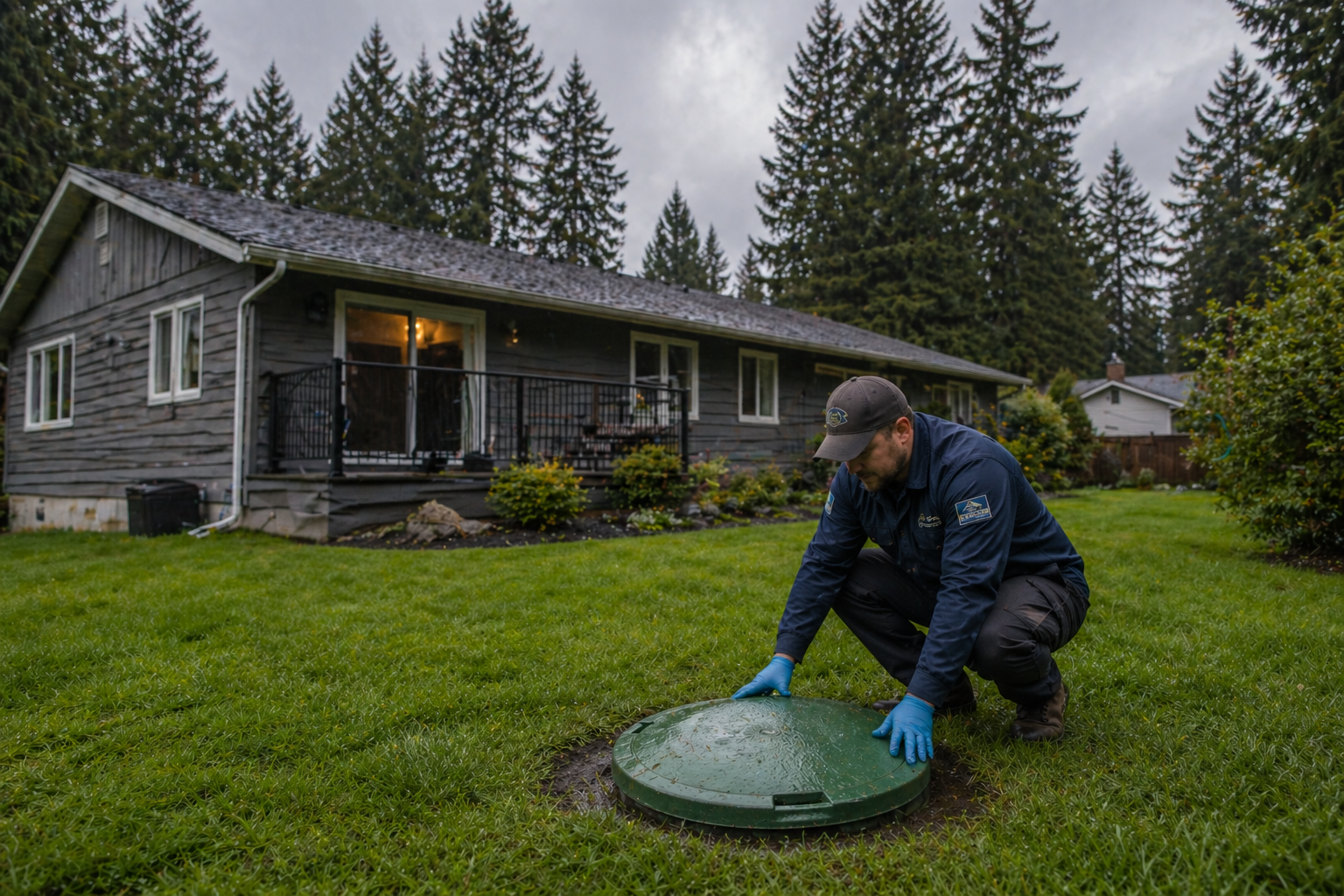
Why May Is the Best Time for a Septic Inspection
For homeowners in Nanaimo and across Central Vancouver Island, May is one of the smartest months to schedule a septic inspection. The heavy winter rain has passed, spring conditions have revealed how your property drains, and summer activities are just around the corner.
By the time summer arrives, many households use more water. Families host guests, kids spend more time at home, laundry increases, outdoor cleaning begins, landscaping projects start, and vacation properties may see more frequent use. If your septic system already has a hidden issue, summer can push it from “quiet concern” to “urgent repair.”
A septic inspection in May gives you the opportunity to find problems early, plan repairs before peak season, and protect your home from slow drains, sewage odours, soggy lawns, backups, and drain field problems.
For properties in Nanaimo and Central Vancouver Island, this is especially important because many homes rely on onsite wastewater systems. The Regional District of Nanaimo explains that onsite systems, commonly known as septic systems, are used by thousands of homes in the region to treat wastewater.
VI Reel provides septic and excavation services in Nanaimo and across Central Vancouver Island, including septic installations, repairs, and professional septic inspections, especially for homeowners buying or selling a property.
If your goal is to enjoy summer without septic surprises, May is the month to act.
Why Timing Matters for Septic Inspections
A septic inspection is useful any time of year, but May offers several practical advantages.
During winter and early spring, Vancouver Island properties often deal with heavy rain, saturated soil, and poor drainage. These conditions can reveal whether a septic system is struggling. By May, homeowners may have already noticed warning signs such as wet patches, slow drains, odours, or unusually green grass over the drain field.
At the same time, May is still early enough to schedule service before summer demand increases. Waiting until July or August may leave you dealing with issues during the busiest season for outdoor projects, family gatherings, and home use.
A May inspection helps homeowners:
- Catch septic problems after wet spring weather
- Prepare for increased summer water use
- Avoid emergency repairs during peak season
- Protect the drain field before landscaping
- Confirm whether pumping or repairs are needed
- Plan excavation or grading work if drainage is a concern
- Gain peace of mind before hosting guests
- Support a smoother home sale if the property is being listed
HealthLinkBC explains that all onsite sewage systems need ongoing maintenance for proper operation, and homeowners in British Columbia are responsible for carrying out a maintenance plan using an authorized person.
That makes May more than just a convenient time. It is a strategic time to check your system before seasonal pressure increases.
Spring Rain Can Reveal Hidden Septic Problems
One of the biggest reasons May is ideal for septic inspections is that spring rain often exposes problems that were not obvious during drier weather.
A septic system depends on the soil around the drain field. After wastewater leaves the septic tank, it moves into the drain field, where the soil helps filter and absorb it. If the ground is saturated with rainwater, the drain field may not accept wastewater as efficiently.
This can cause symptoms such as:
- Slow drains
- Gurgling toilets
- Sewage odours
- Standing water near the septic area
- Wet or spongy grass
- Backups during heavy household use
- Septic alarms going off
By May, the wettest months have often put your system through a natural stress test. If your property has drainage problems, compacted soil, tree root intrusion, or an aging septic system, you may begin to notice clues.
This is why waiting until summer can be risky. If spring rain already revealed warning signs, increased summer use may make them worse.
Summer Brings More Water Use
Summer often means more activity at home, and more activity usually means more water entering the septic system.
Common summer water-use increases include:
- More showers
- More laundry
- More dishwasher loads
- Guests staying over
- Outdoor cleaning
- Children home from school
- Vacation rental use
- Gardening and landscaping
- Family barbecues and gatherings
A healthy septic system can usually manage normal household use. But if the tank is too full, the filter is clogged, the drain field is saturated, or the system is aging, extra summer water can trigger problems.
When too much water enters the septic system at once, the tank may not have enough time to separate solids properly. This can push solids toward the drain field, where they may cause clogging or long-term damage.
Scheduling an inspection in May helps you know whether your system is ready for summer. A professional can check visible warning signs, maintenance history, tank condition, drain field concerns, filters, access points, and whether additional service is recommended.
May Gives You Time to Fix Problems Before They Become Emergencies
One of the biggest benefits of a May septic inspection is time.
If a professional finds a concern in May, you may still have time to schedule repairs, pumping, excavation, grading, or follow-up service before summer is fully underway. That is much better than discovering a problem during a family gathering, long weekend, home sale, or vacation rental booking.
Septic emergencies can be stressful because they may involve:
- Sewage backing up into the home
- Bad odours inside or outside
- Wet, contaminated areas in the yard
- Temporary limits on water use
- Emergency service costs
- Disrupted summer plans
- Property damage
- Health and safety concerns
Island Health notes that failing sewerage systems can create health hazards, including sewage ponding on the ground surface or sewage entering drinking water sources.
The earlier you catch an issue, the more options you usually have. A small repair or maintenance appointment is easier to manage than a full emergency response.
A May Inspection Helps Protect Your Drain Field
Your drain field is one of the most important parts of your septic system. It is also one of the most expensive parts to repair or replace if it fails.
The drain field can be damaged by:
- Excess wastewater
- Saturated soil
- Soil compaction
- Tree roots
- Poor grading
- Vehicles parked overhead
- Heavy equipment
- Construction or landscaping
- Clogged filters
- Solids leaving the tank
- Surface water draining into the area
In May, many homeowners begin outdoor projects such as landscaping, fencing, driveway improvements, grading, retaining walls, stump removal, and garden preparation. Before any of that work begins, it is important to know where your septic tank, drain field, and pipes are located.
HealthLinkBC recommends keeping accurate drawings that show the location of all parts of the sewage system because they help maintenance providers troubleshoot problems.
A septic inspection can help you understand your system layout and avoid accidental damage during summer property upgrades.
May Is a Smart Month Before Landscaping and Excavation
Many homeowners start outdoor projects in late spring and early summer. But if your property has a septic system, you need to plan carefully before digging, grading, planting, or building.
A septic inspection before landscaping can help prevent mistakes such as:
- Planting deep-rooted trees near septic pipes
- Installing a shed over the drain field
- Driving equipment over septic components
- Building a patio where access is needed
- Grading water toward the drain field
- Damaging pipes with fence posts
- Covering tank lids or access points
- Installing irrigation over the drain field
VI Reel offers septic and excavation services, including septic installations and repairs, stump removal, grading, fencing, and related property work in Nanaimo and Central Vancouver Island.
This is useful because septic performance and property grading are often connected. If surface water flows toward your drain field, the soil may become overloaded. If excavation is needed for repairs, it is better to plan before final landscaping is complete.
A Septic Inspection Can Help You Avoid Unnecessary Pumping
Many homeowners assume septic maintenance always means pumping. Pumping is important, but it should be based on actual system needs.
A septic inspection can help determine whether your tank needs pumping now or whether it can wait. VI Reel explains that some homeowners pump too often, and a technician can check sludge levels to make decisions based on data instead of guessing.
This is one reason a May inspection can save money. Instead of waiting until problems appear or scheduling services blindly, you get a clearer picture of what your system actually needs.
A professional may assess:
- Sludge and scum levels
- Tank condition
- Filter condition
- Drain field symptoms
- Signs of backup or restriction
- Visible access points
- Maintenance history
- Whether pumping is needed
- Whether repairs or monitoring are more appropriate
This gives homeowners confidence before summer use increases.
Septic Inspections Are Especially Important When Buying or Selling a Home
Spring and summer are busy real estate seasons. If you are buying or selling a home in Nanaimo or Central Vancouver Island, May is a good time to schedule a septic inspection.
For sellers, an inspection can help identify issues before listing or before a buyer’s condition period. It can also show that the system has been reviewed, which may help build buyer confidence.
For buyers, a septic inspection can reveal problems that are not visible during a regular walk-through. A beautiful yard does not always mean the septic system is healthy.
A buyer may want to know:
- Where the septic tank is located
- Where the drain field is located
- When the system was last inspected
- When the tank was last pumped
- Whether there are signs of failure
- Whether the system is suitable for current use
- Whether repairs may be needed soon
- Whether maintenance records are available
VI Reel specifically notes that septic inspections are especially helpful for those buying and selling a home.
A May inspection gives both buyers and sellers more time to make informed decisions before summer moving schedules become hectic.
Warning Signs That Mean You Should Not Wait Until Summer
Some homeowners delay septic inspections because the system still seems to be working. But certain warning signs should be addressed quickly.
Schedule a septic inspection if you notice:
- Multiple slow drains
- Toilets gurgling
- Sewage smell inside the home
- Sewage smell in the yard
- Water pooling near the septic tank
- Soggy grass over the drain field
- Extra-green grass in one area
- Sewage backing up into tubs or toilets
- Septic alarm activation
- Wet soil that does not dry
- Problems after heavy rain
- Unknown septic maintenance history
These signs may not always mean complete system failure, but they do mean your system needs attention.
The Regional District of Nanaimo’s SepticSmart materials explain that septic system care includes regular pump-outs, monitoring, inspections, and repairs or upgrades when needed.
Ignoring symptoms can lead to more expensive repairs later.
What Happens During a Septic Inspection?
A septic inspection can vary depending on the property, system type, and reason for the inspection. However, a professional may review several key areas.
System location
The inspector may identify or confirm the location of the septic tank, access points, and drain field.
Visible warning signs
They may look for wet spots, odours, standing water, lush grass, erosion, or signs that wastewater is not dispersing properly.
Tank condition
Where accessible, the tank may be checked for condition, liquid levels, sludge levels, scum levels, and signs of damage.
Filters and components
If the system has an effluent filter, pump, alarm, or other components, these may be reviewed.
Drain field concerns
The inspector may assess whether the drain field shows signs of saturation, compaction, or failure.
Maintenance history
Past pumping dates, inspection records, repair history, and system drawings may help determine the next steps.
Recommendations
The homeowner may receive guidance on whether pumping, repairs, maintenance, monitoring, or further assessment is needed.
Because septic tanks can contain dangerous gases and confined-space hazards, homeowners should not attempt to open or inspect tanks themselves.
Why May Is Better Than Waiting Until July or August
By July and August, septic problems can become more disruptive.
Summer often means:
- Higher contractor demand
- More guests in the home
- More outdoor events
- More water use
- Drier landscaping work already completed
- Less flexibility for repairs
- Greater inconvenience if water use must be reduced
If a septic issue is found in May, you may have more time to deal with it before peak summer plans. This is especially helpful if the issue requires excavation, grading, drain field protection, or coordination with other property work.
Waiting until midsummer can also increase stress. Nobody wants to deal with septic odours, wet lawn areas, or wastewater backups while hosting guests or trying to enjoy the yard.
May gives you a practical head start.
How Homeowners Can Prepare for a Septic Inspection
Before your inspection, gather as much information as possible.
Helpful items include:
- Septic system layout or drawing
- Previous inspection reports
- Pumping records
- Repair records
- Maintenance plan
- Location of tank lids or risers
- Notes about recent warning signs
- Photos of wet areas or odours
- Real estate documents, if buying or selling
- Any history of backups or drainage issues
If you do not have records, do not worry. Many homeowners do not know exactly where their septic system is located, especially if they purchased an older home. A professional can still help assess the system and guide next steps.
How to Keep Your Septic System Healthy Before Summer
A May inspection is a strong first step, but daily habits also matter.
To reduce summer septic stress:
Spread out laundry
Avoid doing many loads in one day. Spread laundry across the week so the system has time to process wastewater.
Fix leaks quickly
A running toilet or dripping faucet can send unnecessary water into the system.
Avoid flushing wipes
Even wipes labelled “flushable” can clog pipes and create septic issues.
Keep grease out of drains
Cooking oil and grease can build up and interfere with normal system function.
Use septic-safe products
Avoid harsh chemicals, excessive bleach, solvents, paint, pesticides, and drain cleaners.
Protect the drain field
Do not park, build, drive, or place heavy items over the drain field.
Redirect rainwater
Move downspouts and surface runoff away from the septic area.
Keep records
Save all inspection, pumping, repair, and maintenance documents.
These habits can help extend system life and reduce the risk of unexpected problems.
May Septic Inspection Checklist for Nanaimo and Vancouver Island Homeowners
Use this checklist to decide whether it is time to book an inspection:
| Question | Why It Matters |
|---|---|
| Has your system been inspected recently? | Regular inspections help identify problems early. |
| Did your yard stay wet after spring rain? | Saturated soil can reveal drain field issues. |
| Are multiple drains slow? | This may point to a system-wide septic concern. |
| Do you smell sewage indoors or outdoors? | Odours can indicate wastewater or venting issues. |
| Are you planning landscaping or excavation? | You need to protect septic components before digging. |
| Are you hosting guests this summer? | More people means more water use. |
| Are you buying or selling a home? | Inspections provide important property information. |
| Do you know where your tank and field are? | Knowing the layout prevents accidental damage. |
| Has your alarm gone off? | Pump or high-water issues need prompt attention. |
| Are there wet or extra-green areas above the field? | These may indicate drainage or wastewater concerns. |
If you answer yes to any of these, May is a good time to schedule a professional septic inspection.
What If the Inspection Finds a Problem?
Finding a septic issue during an inspection is not always bad news. In fact, it is better to find a problem early than to discover it through a backup.
Depending on what the inspection shows, the next step may be:
- Monitoring the system
- Reducing water use
- Pumping the tank
- Cleaning or replacing a filter
- Repairing damaged pipes
- Improving grading or drainage
- Protecting the drain field
- Addressing tree root intrusion
- Planning a larger repair
- Scheduling excavation work
- Updating maintenance records
In BC, repairs and maintenance to sewerage systems must be performed by authorized persons or under the supervision of an authorized person.
Island Health also states that if a sewerage system is constructed, altered, or repaired, the property owner must engage an Authorized Person, such as a Professional Engineer or Registered Onsite Wastewater Practitioner who meets the regulation requirements.
This protects the homeowner, property, public health, and the environment.
Why Local Experience Matters for Septic Inspections
Septic systems are affected by local property conditions. On Central Vancouver Island, those conditions may include wet winters, sloped lots, wooded areas, clay-heavy soil, high groundwater, and rural properties.
A local septic professional understands how these factors affect system performance.
For example:
- A wooded property may face root intrusion.
- A sloped lot may need better grading.
- A low-lying yard may stay saturated longer.
- A rural property may have older records.
- A home with summer guests may need water-use planning.
- A property being sold may need clear inspection documentation.
VI Reel is based in Nanaimo and serves Central Vancouver Island, offering septic inspections along with septic installations, repairs, and excavation-related services.
That local experience can be valuable when preparing your property for summer.
Frequently Asked Questions
Why is May a good time for a septic inspection?
May is ideal because it comes after heavy winter and spring rain but before peak summer water use. It gives homeowners time to find and fix septic issues before guests, landscaping, outdoor projects, and warmer weather increase demand on the system.
How often should a septic system be inspected?
Inspection frequency depends on the system type, age, household size, water use, and maintenance plan. HealthLinkBC states that all onsite sewage systems need ongoing maintenance and homeowners are responsible for following a maintenance plan using an authorized person.
Do I need an inspection if my septic system seems fine?
Yes, an inspection can still be helpful. Many septic problems develop slowly and may not show obvious symptoms until the system is under stress. May inspections can catch problems before summer use makes them worse.
Should I pump my septic tank before summer?
Not automatically. Pumping may be needed, but it is best to base the decision on actual tank condition, sludge levels, household use, and professional guidance. VI Reel notes that inspections can help homeowners avoid unnecessary pumping by making decisions based on data.
What are signs I need a septic inspection right away?
Schedule an inspection if you notice slow drains, gurgling toilets, sewage smells, standing water, soggy grass over the drain field, backups, or alarm activation.
Can I inspect my septic tank myself?
You can observe your yard and drains, but you should not open or enter a septic tank yourself. Septic tanks can contain dangerous gases and should be handled by trained professionals.
Is a septic inspection important when buying a home?
Yes. A septic inspection can help buyers understand the condition, location, and potential repair needs of the system before completing a purchase. VI Reel notes that septic inspections are especially useful for those buying and selling homes.
Who can repair a septic system in BC?
Septic repairs and maintenance must be done by authorized persons or under their supervision. Island Health explains that an Authorized Person may be a Professional Engineer or Registered Onsite Wastewater Practitioner who meets the regulation requirements.
Final Thoughts
May is one of the best times for Nanaimo and Central Vancouver Island homeowners to schedule a septic inspection before summer. It gives you the chance to check your system after wet spring weather, prepare for increased summer water use, protect your drain field, and avoid stressful emergency repairs.
A septic inspection can help identify slow-developing problems, confirm whether pumping is needed, protect your landscaping plans, and provide peace of mind before guests, gatherings, and outdoor projects begin.
If your home has slow drains, gurgling toilets, sewage odours, wet patches, standing water, or an unknown maintenance history, do not wait until summer. A professional inspection in May can help you catch problems early and keep your property safe, functional, and ready for the season ahead.
Need to schedule a septic inspection before summer? Contact VI Reel for professional septic inspections, repairs, installations, excavation, and property services in Nanaimo and Central Vancouver Island.