

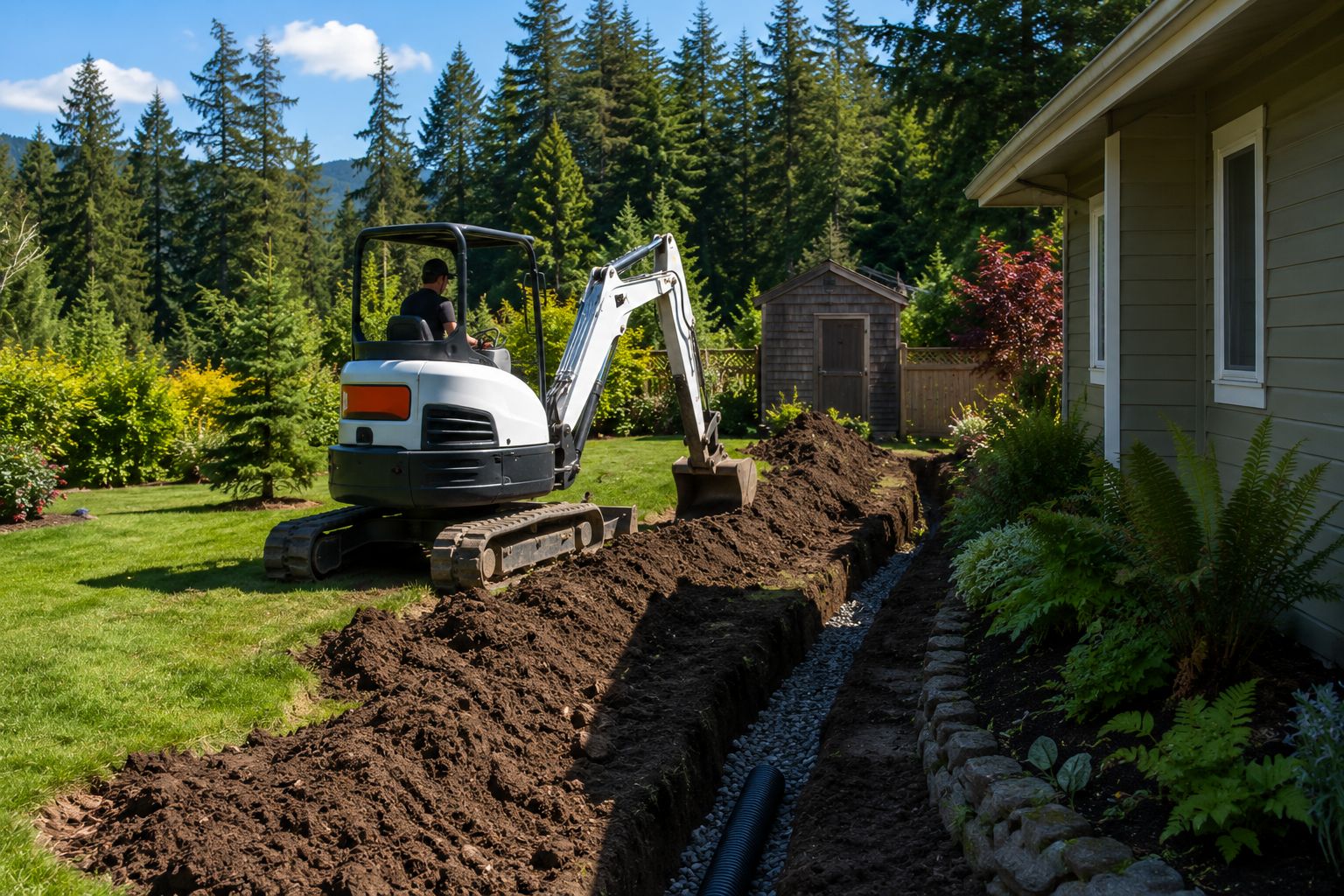
Every spring on Vancouver Island, the same thing happens. The rain eases off, the ground starts to dry, and homeowners walk into the backyard with a list. A new fence. A patch of lawn that turns into a swamp every winter. A slope that sends water straight at the foundation. All of it has been waiting through the wet months, and all of it suddenly feels doable.
It is doable. The catch is that these projects are not independent, and the order you tackle them in matters more than most people expect. Get the sequence right and each project supports the next. Get it wrong and you end up digging up a brand new fence line to fix the drainage you should have handled first.
Here is how to think about spring site work in Nanaimo, what to schedule when, and why drainage almost always comes before the rest.
Why Spring Is the Window for This Work
Excavation and site work depend on the ground, and on Vancouver Island the ground spends a good part of the year too saturated to work cleanly. Dig into soaked soil and you get mud, poor compaction, and a mess that does not settle properly.
Spring sits in the sweet spot. The soil has drained enough to work with, the worst of the rain is behind you, and there is a full dry season ahead for new grading and plantings to settle before the next wet stretch tests them. It is also the time of year when the winter’s drainage failures are still fresh in your memory, which is exactly when you should be fixing them, while you can still see where the water went.
Start With Drainage, Even If It Is Not the Project You Are Excited About
Most homeowners come to spring site work thinking about the fence or the new patio. The drainage is the boring one. It is also the one that should usually go first, because water dictates everything else on a property.
If your yard has a drainage problem, you already know it. The signs are hard to miss once the rain comes:
- Standing water or soggy patches that linger for days after it stops raining.
• Water pooling against the foundation, or a damp basement or crawlspace.
• A section of lawn that has turned to moss or mud and will not recover.
• Soil visibly washing or eroding downslope after heavy rain.
• Gutters and downspouts dumping water in a spot that never drains away.
The reason drainage leads is simple. A drainage fix often involves regrading the yard, cutting trenches for a French drain, or installing pipe and a sump, and all of that is excavation. If you build the fence or lay the patio first and then discover you need to regrade for water, you are tearing out work you just paid for. Solve the water, then build on the corrected ground.
How Yard Drainage Actually Gets Fixed
There is no single yard drainage solution, because the right fix depends on where the water is coming from and where it needs to go. The common approaches each handle a different problem.
Regrading reshapes the surface so water flows away from the house and toward somewhere it can safely drain. This is the foundation of most drainage work, and it is why slope matters so much. A yard needs a consistent fall away from the foundation, and getting that slope right across an entire property is precision work, not a job for a shovel and a guess.
A French drain, a gravel-filled trench with perforated pipe, intercepts water moving through the soil and carries it away. It is the go-to for a yard that stays saturated or a slope that keeps feeding water toward the house.
A sump pump system handles low spots and high water tables where gravity alone will not move the water, lifting it and pumping it clear.
Often the real fix is a combination, and figuring out which combination is where experience and the right equipment earn their keep. The DIY versions of these projects exist, and for a small, simple problem they can work. The trouble is that most Island drainage problems are not small or simple, and a misjudged slope or an undersized pipe means doing the whole thing again.
Grading: The Project That Makes Everything Else Work
Grading and drainage are really two sides of the same job. Grading is the shaping of the land, and good grading is what sends water where you want it instead of where it wants to go on its own.
Beyond drainage, grading is what you do to prepare ground for almost anything else. A level, properly compacted base for a shed, a patio, a driveway, or a new lawn all start with grading. If you are planning any of those this year, the grading has to happen before the surface goes down, and ideally as part of the same site visit as your drainage work, since the equipment is already there and the two jobs inform each other.
This is the part homeowners underestimate. Grading looks like just moving dirt around. Done properly it is the difference between a patio that drains and one that floods, and between a yard that stays dry and one that funnels water into the basement.
Fencing: Schedule It, but Mind What Is Underground
Fencing is the project most people start with and the one that should often come last in the sequence, after the ground has been graded and the drainage is sorted. There is no point setting posts along a line you might have to regrade.
Fencing is also excavation, even though it does not feel like it. Every post hole is a small dig, and on a Vancouver Island property that means thinking about what is underground before the auger goes in. This is where Vireel’s earlier advice carries straight over: know where your septic system, lines, and utilities run before you dig a single post hole. A fence post driven through a septic line or a buried utility turns a weekend project into an expensive emergency. Locating first is cheap. Hitting something is not.
Once the ground is right and you know what is below, fencing is straightforward and a good late-spring job, set on stable, well-drained ground that will hold the posts true for years.
The Order That Saves You Money
Put simply, the sequence that keeps you from paying twice looks like this:
- First, locate any underground systems, septic, water, and utility lines, so nothing gets damaged.
• Second, solve drainage and grading together, since they share equipment and shape the whole site.
• Third, build on the corrected ground, fencing, patios, sheds, and plantings, knowing the base is stable and the water is handled.
Booked the other way around, each project undoes the one before it. Booked in this order, each one sets up the next.
Common Questions From Nanaimo Homeowners
How Much Does Yard Drainage Cost?
It depends heavily on the size of the yard, the type of fix, and access for equipment. A simple regrade is at the lower end, while a full French drain or sump system across a problem property costs more. The honest answer is that an on-site look is the only way to give a real number, because every yard drains differently.
Can I Fix Yard Drainage Myself?
For a small, isolated wet spot, sometimes yes. The problems that need a pro are the ones involving slope across the whole yard, water reaching the foundation, or anything requiring a trench and pipe at the correct fall. Those go wrong easily when guessed at, and the redo costs more than doing it right once.
What Slope Does a Yard Need to Drain Properly?
As a general guideline, the ground should fall away from the foundation steadily over the first several feet, then maintain enough fall to keep water moving toward where it can drain. Getting that consistent across a real, uneven yard is the technical part, and it is what proper grading delivers.
Should I Do Drainage or Fencing First?
Drainage and grading first, fencing after. Anything that involves shaping the ground should happen before you build fixed structures on it. Setting a fence first and then needing to regrade means tearing the fence back out.
Why Does This Have to Happen in Spring?
Spring gives you workable, drained soil and a full dry season ahead for new grading and plantings to settle before the rain returns. It is also when winter’s drainage problems are freshest, so you can see exactly where the water went.
Do I Really Need to Locate My Septic System Before Fencing?
Yes. Post holes are small excavations, and driving one through a septic component or a buried line is a costly, messy mistake. Locating first is a small step that prevents a large repair.
Plan the Season in the Right Order
Spring site work goes smoothly when it is sequenced properly: water first, ground second, structures last. The homeowners who run into trouble are usually the ones who started with the visible project and discovered the underground one too late.
Vireel handles excavation, grading, and drainage across Nanaimo and Central Vancouver Island, with the equipment to get slope and water right the first time. If you are mapping out fencing, grading, or a drainage fix this spring, reach out at vireel.ca and we can walk the property, sort the sequence, and handle the digging before the dry season slips away.