

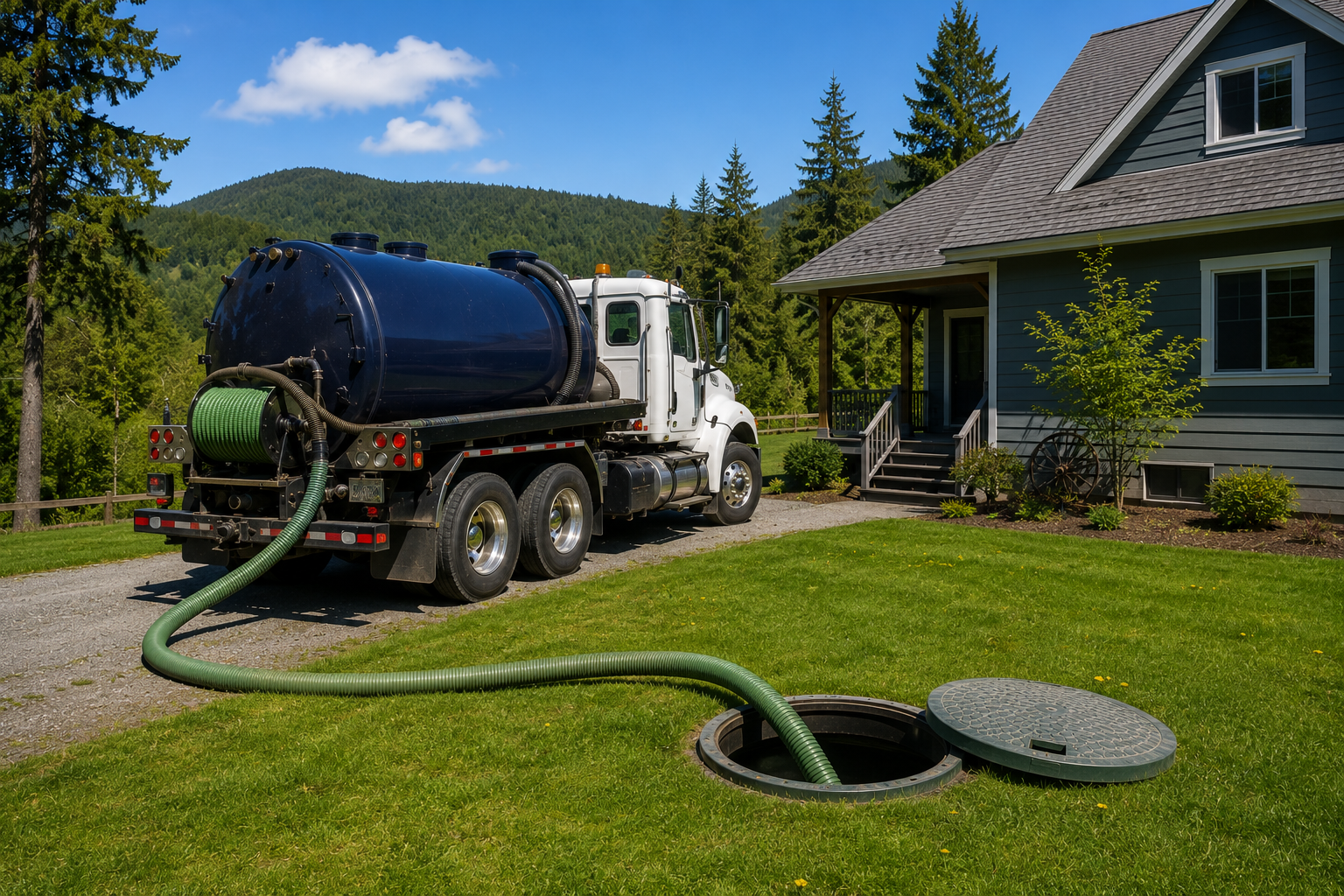
It is one of those questions that is easy to put off, because a septic tank gives no obvious reason to act until it gives a very obvious one. Out of sight, underground, working away. So the honest version of the question most homeowners are really asking is not just when to pump, but whether they truly need to at all.
Short answer: yes, every septic tank needs pumping on a schedule, and no, you should not wait for a problem to tell you. The more useful questions are how often, how to know you are due, and why the stretch before summer is a smart time to handle it on Vancouver Island. This is the practical guide to all three.
Do You Really Need to Pump It?
This comes up constantly, usually from homeowners who have gone years without pumping and had no trouble. The reasoning feels sound: if nothing is wrong, why pay to fix it? The flaw is in what pumping actually does.
Solids accumulate in the tank over time. The tank is designed to hold them while the liquid flows on to the drainfield, but it has a finite capacity. Pumping removes that built-up sludge before it fills the tank. Skip it long enough and the solids reach the point where they start carrying out into the drainfield, and that is the expensive failure, because a clogged drainfield is far harder and costlier to fix than a tank is to pump. Some drainfield damage cannot be undone at all.
So pumping is not a repair. It is the maintenance that prevents the repair. A tank that has gone years without trouble is not proof you do not need to pump. It is the countdown before you do.
How Often Should You Pump?
There is no single number, because frequency depends mostly on two things: the size of your tank and how much your household uses it. A small tank serving a large family fills far faster than a large tank serving a couple. This is why the same advice does not fit every home.
As a general guideline, many households land somewhere in the every-few-years range, but the practical driver is people in the house. More people means more water and more solids, which means more frequent pumping.
General Septic Pumping Frequency Guide
| Household Size | Typical Pumping Frequency |
| 1-2 people | Every 4-5 years |
| 3-4 people | Every 3-4 years |
| 5-6 people | Every 2-3 years |
| 7+ people | Every 1-2 years |
Treat that as a starting point, not a rule. The only way to know your home’s real interval is to have the tank checked, because tank size, water habits, and even what goes down the drains all shift the timeline. A septic professional can look at the sludge level and tell you where you actually stand.
Signs Your Tank Is Overdue
Ideally you pump on schedule and never see these. But if you are not sure when the tank was last done, these are the signals that it is past time:
- Drains and toilets throughout the house running slow, not just one fixture.
• Gurgling sounds in the plumbing when water drains.
• Sewage odours indoors or outside near the tank or drainfield.
• Unusually lush, green, or soggy grass over the drainfield.
• Standing water or wet ground around the tank or field.
• In the worst case, wastewater backing up into the lowest drains in the house.
By the time these appear, the tank is usually well past full and the drainfield may already be taking on more than it should. They are reasons to act now, not reasons to keep waiting.
Why Before Summer Specifically
Here is where timing turns into a real advantage rather than just a chore. On Vancouver Island, the months ahead are the heaviest use your system will see all year, and the ground conditions before summer make the work easier.
Summer is when the household load spikes. Family visits, guests staying over, long weekends, more laundry, more showers, kids home from school. Every one of those adds water and solids to a tank that may already be near its limit. A tank that would have been fine through a quiet winter can tip into trouble exactly when the house is full and the last thing you want is a backup over a holiday weekend.
Pumping before that load arrives means the tank goes into its busiest season with full capacity. There is also a practical access benefit. By late spring the ground has dried from the wet season, which makes locating and reaching the tank cleaner and easier than digging through saturated soil. You get a smoother job and a system ready for the months that demand the most from it.
Handle it now and the summer takes care of itself. Skip it and you are gambling on the busiest stretch of the year.
What It Costs, and Can You Do It Yourself?
Pumping cost depends on tank size, access, and how much buildup is in there, but it sits firmly in the category of routine maintenance, far below the cost of a failed drainfield. Spending it on schedule is one of the cheaper things you can do to protect a septic system, which is among the more expensive systems in a rural home to replace.
As for doing it yourself: pumping a septic tank is not a DIY job. It requires specialized equipment to extract the waste, and the material has to be transported and disposed of at an approved facility under regulations. This is professional work, and it is one of the clearer cases where hiring out is the only sensible route. What you can do yourself is the easy part, keeping records of when it was pumped and watching for the warning signs between services.
Common Questions From Island Homeowners
How Often Should a Septic Tank Be Pumped?
It depends mainly on tank size and household size, but many homes fall into an every-few-years rhythm. Larger households pump more often because the tank fills faster. The reliable way to find your interval is to have the sludge level checked rather than guessing.
Do I Really Need to Pump if Nothing Seems Wrong?
Yes. Pumping is preventive maintenance, not a repair. Solids build up whether or not you notice, and letting them reach the drainfield causes the expensive failure that pumping exists to prevent. No symptoms means the schedule is working, not that you can skip it.
Can I Pump My Septic Tank Myself?
No. It requires specialized extraction equipment and regulated disposal of the waste, so it is a professional job. The part you handle is keeping track of the schedule and watching for signs between pumpings.
How Much Does It Cost to Pump a Septic Tank?
It varies with tank size, access, and buildup, but it is routine-maintenance pricing and far cheaper than repairing or replacing a drainfield. An on-site assessment gives an accurate figure for your specific system.
When Is the Best Time to Pump a Septic Tank?
Ahead of heavy-use periods, which for most Island homes means before summer. Pumping before guests, long weekends, and increased summer use means the tank faces its busiest season with full capacity, and the drier spring ground makes access easier.
How Long Can a Septic Tank Go Without Being Pumped?
Longer than you might think, which is exactly the trap. It can run for years past due before failing, and the failure tends to be the costly kind. Pumping on schedule rather than running it to the limit is far cheaper than dealing with the consequences.
Get It Done Before the Season Fills Up
The decision to pump a septic tank is rarely urgent until it suddenly is, and the homeowners who avoid that moment are the ones who handle it on schedule rather than on symptoms. Before summer, with its heavy use ahead and its dry ground underfoot, is one of the better windows on Vancouver Island to take care of it.
If you are not sure when your tank was last pumped, or you want it checked and serviced before the summer load arrives, Vireel provides septic tank pumping, inspection, and maintenance across Nanaimo and Central Vancouver Island. Reach out at vireel.ca and head into summer with the system ready, instead of finding out the hard way over a long weekend.