

A septic system spends most of the year quietly doing its job, which is exactly why most homeowners never think about it until the wettest stretch of the year, when it suddenly stops behaving. Slow drains. A gurgle in the toilet. A patch of lawn that smells wrong. Or, in the worst case, sewage backing up into the house.
These problems are not random, and they are not bad luck. On Central Vancouver Island, where the ground stays wet for months, they are seasonal. The system that worked fine all summer struggles in spring for one reason: a septic system does not work alone. It depends entirely on the soil around it, and when that soil is saturated, the whole system has nowhere to send the water.
Understanding that link is the difference between catching a problem early and discovering it the hard way, on the bathroom floor.
Why the Soil Matters More Than the Tank
To see why wet weather causes trouble, it helps to know what a septic system actually relies on. Wastewater leaves the house and enters the tank, where solids settle and the liquid, called effluent, flows out into the drainfield. The drainfield is a network of perforated pipes in gravel-filled trenches, and its whole purpose is to release that effluent slowly into the surrounding soil, where the ground filters and absorbs it.
That last step is the key. The drainfield depends on the soil being able to take water. The system is essentially borrowing the ground’s capacity to absorb. As long as the soil has room, everything flows. When the soil is already full, it has nothing left to give.
This is why a septic system is really a soil system with a tank attached. The tank gets the attention. The soil does the work.
What a Saturated Water Table Does
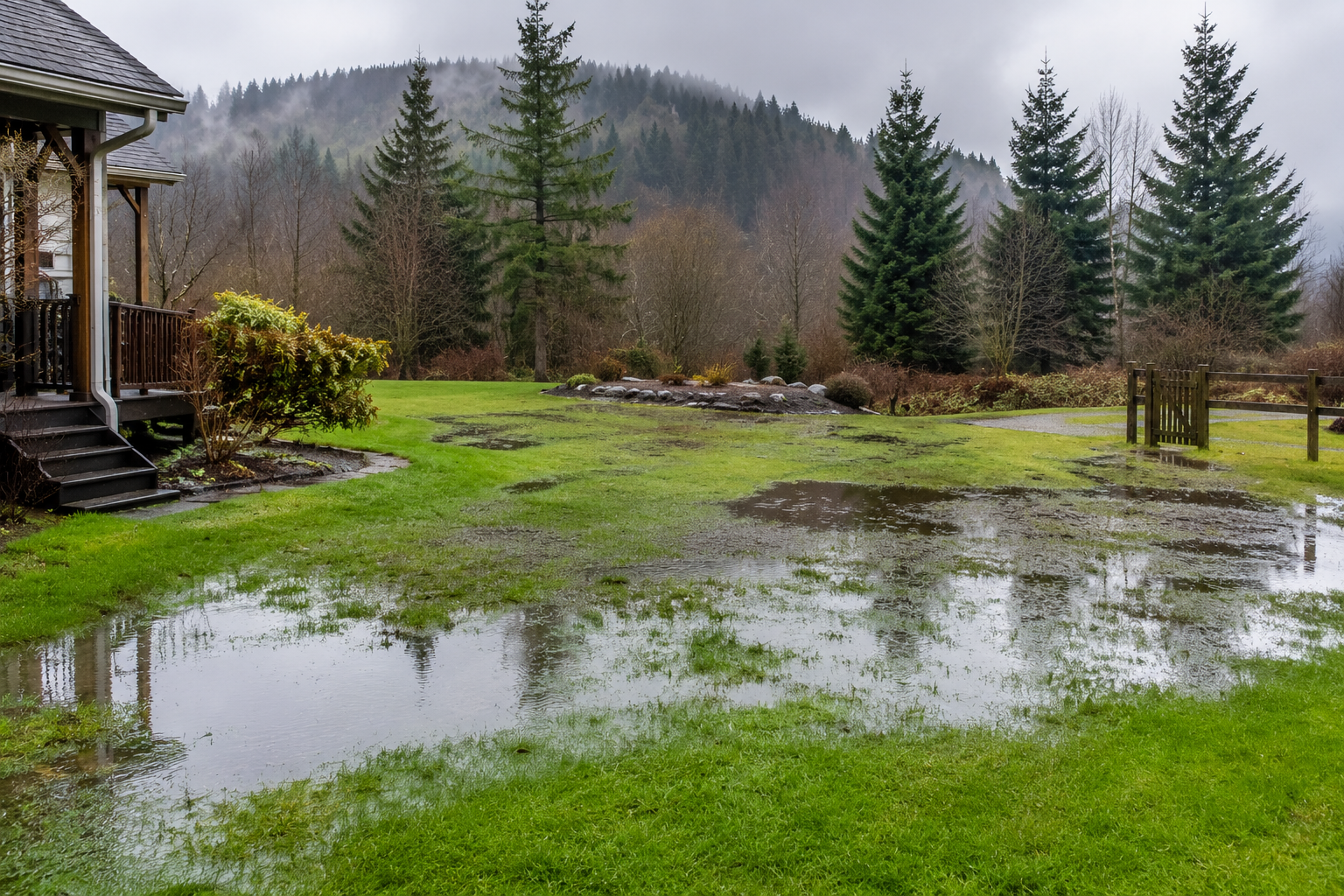
Here is what happens through a Vancouver Island wet season. Weeks of rain soak into the ground and the water table rises. The soil around the drainfield, which normally has plenty of room to absorb effluent, fills with rainwater. By late winter and into spring, that soil can be at or near saturation.
Now the drainfield tries to release effluent into ground that is already full, and the water has nowhere to go. It backs up in the trenches. It can rise to the surface, which is the soggy, smelly patch over the drainfield that homeowners sometimes notice. And if the system cannot move water out fast enough, the backup works in the other direction, toward the house, slowing every drain in the home and eventually surfacing where you least want it.
None of this means the system is broken. It means the system is overwhelmed by conditions, and the conditions are seasonal. A drainfield that copes easily in August can be right at its limit in March.
The Warning Signs to Watch for in Spring
Septic problems give warning before they become emergencies, if you know what to watch for. During the wet months, pay attention to these:
- Drains and toilets that empty more slowly than usual across the whole house, not just one fixture.
• Gurgling sounds from drains or toilets when water runs elsewhere in the house.
• A patch of grass over the drainfield that is suddenly greener, soggier, or smells of sewage.
• Standing water or a damp area over the tank or drainfield that lingers.
• Sewage odours indoors or outside near the system.
• Wastewater backing up into the lowest drains in the house, the worst-case sign.
A single slow drain is usually a plumbing issue. Several slow drains at once, especially paired with any of the other signs, points at the septic system struggling with the wet ground. The earlier you catch it, the more options you have and the less likely you are to face a backup indoors.
What to Do When the Ground Is Saturated
If your system is showing stress during a wet spell, the goal is to reduce the load on it until the ground dries out and to avoid making the saturation worse.
The single most effective thing is to use less water. The drainfield is struggling to release what it already has, so every litre you send down the drain adds to the problem. Space out laundry rather than running loads back to back, fix any running toilets or dripping taps, and go easy on long showers and full baths during the wettest stretches. It feels minor, but reducing flow buys the saturated drainfield breathing room.
Keep surface water away from the system too. Make sure gutters and downspouts discharge well clear of the tank and drainfield, and that the yard is not channeling runoff over them. This is where septic care and yard drainage overlap directly: good site drainage protects the septic system by keeping the ground around it from flooding in the first place.
What you should not do is wait it out while the warning signs get worse, or assume a backup will simply clear on its own. If wastewater is backing up indoors, that is the point to call a professional rather than reaching for a chemical drain product, which will not fix a saturated drainfield and can harm the system.
Why Pumping and Maintenance Timing Matters
One of the most searched septic questions is when to pump the tank, and wet weather is part of the answer. A tank that is overdue for pumping has less working capacity, which means solids can carry into the drainfield and clog it, and a clogged drainfield is far less able to cope when the ground is already wet. Regular pumping keeps the tank doing its job so the drainfield is not asked to handle more than it should.
The practical rhythm for most Island households is to have the tank inspected and pumped on a regular schedule rather than waiting for symptoms. Going into the wet season with a recently serviced system is the cheapest insurance against a spring backup. Going into it with a neglected tank is asking the drainfield to absorb both the season and the backlog at once.
Common Questions From Island Homeowners
Can a Septic System Back Up Into the House in Wet Weather?
Yes, and wet weather is one of the most common triggers. When the ground around the drainfield is saturated, the system cannot release effluent, so it backs up. If it cannot surface in the yard fast enough, it works back toward the lowest drains in the house. It is a clear sign the system is overwhelmed and needs attention.
Why Is My Septic System Fine in Summer but Not in Spring?
Because the difference is the ground, not the system. In summer the soil around the drainfield is dry and absorbs effluent easily. After a wet season the soil is saturated and has no room left, so the same system that coped fine in August struggles in March.
Does Using Less Water Actually Help?
It does, especially during a wet spell. The drainfield is struggling to release what it already holds, so reducing how much you send into the system gives the saturated ground time to catch up. Spacing out laundry and fixing leaks makes a real difference.
How Often Should I Pump My Septic Tank?
On a regular schedule rather than only when problems appear, with the interval depending on tank size and household use. Going into the Vancouver Island wet season with a recently serviced tank is the best way to avoid a spring backup, because a full or overdue tank pushes extra load onto an already stressed drainfield.
Is a Soggy Patch Over the Drainfield Always a Problem?
In the depths of a wet season some dampness can be normal, but a patch that is noticeably soggier, greener, or smells of sewage is a warning sign that effluent is surfacing because the soil cannot absorb it. It is worth having looked at rather than ignored.
Can Yard Drainage Help Protect My Septic System?
Yes. Keeping surface water and runoff away from the tank and drainfield reduces how saturated that ground gets, which directly helps the system cope. Good site drainage and a healthy septic system go hand in hand on a wet-climate property.
Get Ahead of the Wet Season, Not Behind It
Spring septic trouble on Vancouver Island is rarely a surprise once you understand it. The ground fills with water, the drainfield runs out of room, and a system that was fine all summer starts to struggle. The homeowners who avoid the worst of it are the ones who watch for the early signs and keep the system maintained before the rain piles up.
If your system is showing signs of strain, or you want it inspected and serviced before the next wet season tests it, Vireel handles septic inspection, maintenance, and the drainage work that protects it, across Nanaimo and Central Vancouver Island. Reach out at vireel.ca and get the system ready before the ground decides the matter for you.