

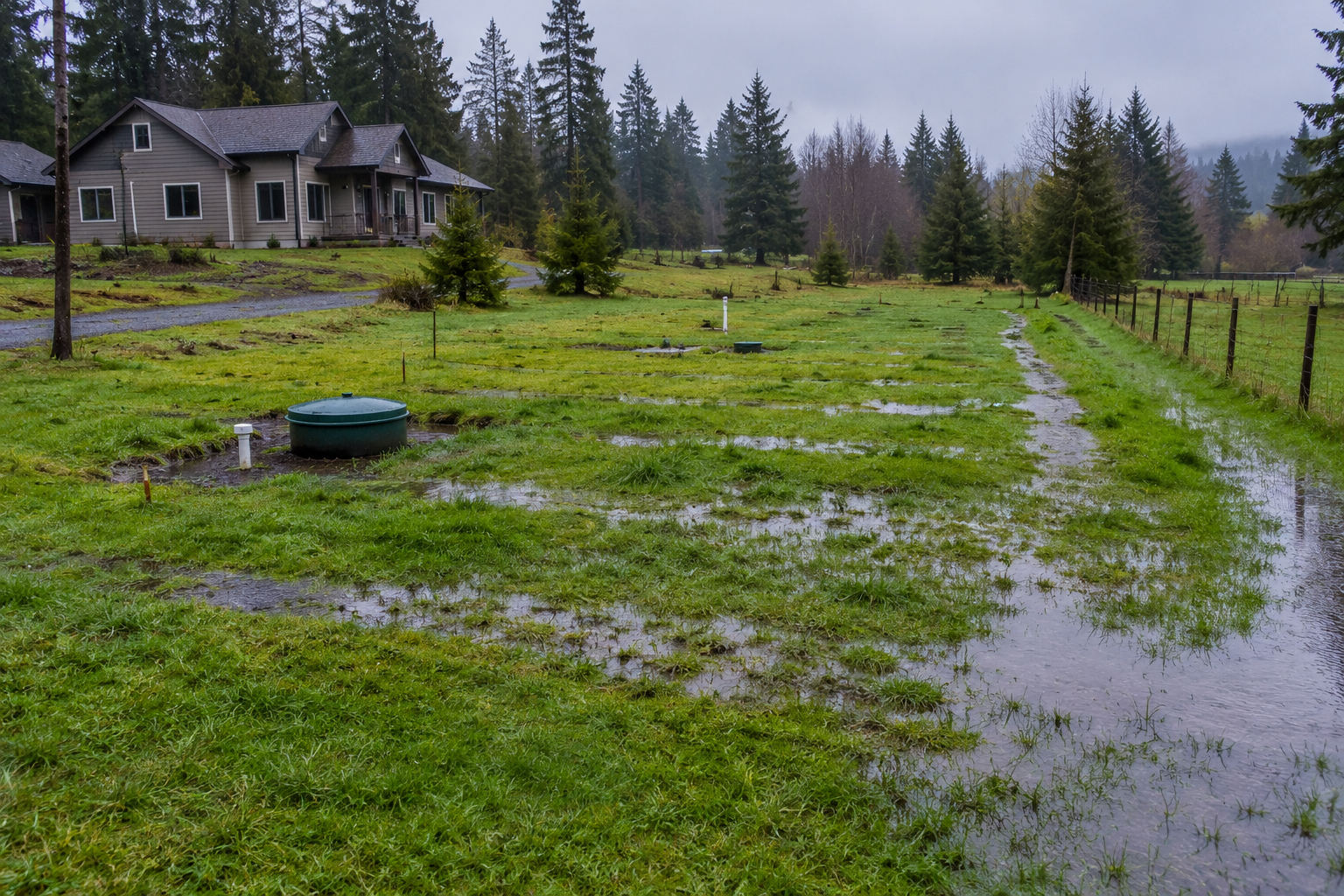
On Central Vancouver Island, rain is just part of life. We plan around it, dress for it, and mostly stop noticing it. Your septic system, on the other hand, notices every drop. For homes on septic out in Nanaimo, Lantzville, Cedar, and the surrounding rural areas, our wet climate is one of the biggest stresses a system faces, and it is one a lot of homeowners do not think about until something goes wrong.
Understanding how heavy, sustained rain affects a septic system, and knowing the early warning signs, can save you from an unpleasant and expensive backup. Here is what actually happens underground when the weather turns, and what you can do about it.
How a septic system is supposed to work
To understand the problem, it helps to picture the normal process. Wastewater leaves your home and flows into the septic tank, where solids settle to the bottom and liquid flows out into the drain field, also called the leach field. In the drain field, that liquid slowly soaks down through the soil, which naturally filters and treats it before it rejoins the groundwater.
The whole system depends on one thing: the soil around the drain field being able to absorb water. When the ground can no longer take in liquid, the system has nowhere to send the wastewater, and that is when trouble starts.
What heavy rain does to the system
Here is the core problem. After a long stretch of Island rain, the ground around your drain field becomes saturated. The water table, the level of water naturally held in the soil, rises. Sometimes it rises right up to or above the level of the drain field itself.
When that happens, the soil that is supposed to absorb your wastewater is already full of rainwater. It physically cannot take any more. The liquid leaving your tank has nowhere to go, so it backs up. In the best case, the system simply stops draining properly. In the worst case, wastewater backs up into the drain field surface or even back toward the house.
This is why septic backups spike during our wettest stretches. It is not that the system suddenly failed. It is that the surrounding ground became too waterlogged to do its job, and a system that was coping fine in dry weather got overwhelmed.
The warning signs of a wet-weather septic problem
A struggling septic system usually gives you signals before it fails completely. During or after a heavy rain spell, watch for these:
- Slow drains throughout the house, especially toilets, sinks, and tubs that empty sluggishly all at once rather than just one fixture.
- Gurgling sounds coming from drains or toilets—a sign that the system is struggling to move water through.
- Standing water or a soggy, spongy area over the drain field, sometimes with an unusually lush patch of grass.
- Unpleasant odours around the tank or drain field area, indoors or out.
- Sewage backing up into the lowest drains in the home, which is the most serious sign and needs immediate attention.
If you notice any of these during a wet spell, do not ignore them. They are your system telling you it is overwhelmed, and acting early is far cheaper than dealing with a full backup.
What makes some properties more vulnerable
Not every septic system struggles in the rain. A few factors make Island properties more prone to wet-weather trouble:
- A naturally high water table, common in low-lying and near-shore areas, means the ground is closer to saturation to begin with.
- Heavy clay soils drain slowly and hold water, so they reach saturation faster than sandy soils.
- An older or undersized drain field has less capacity to handle peak loads when conditions are already wet.
- Poor surface drainage that directs roof runoff, driveway water, or downslope flow toward the drain field adds insult to injury.
If your property has several of these factors, your system deserves extra attention through the wet season. A little prevention goes a long way when the ground is already working against you.
What you can actually do to protect your system
You cannot stop the rain, but you can take real steps to help your septic system cope with it.
Manage your surface water
One of the most effective things you can do is keep extra water away from the drain field. Make sure roof downspouts, gutters, and any surface drainage direct water well away from the leach field area. The last thing a saturated drain field needs is your roof runoff pouring onto it. Good grading and drainage around the property genuinely reduce the load on the system during heavy rain, and that is work Vireel handles regularly for Island homeowners.
Go easy on water use during wet spells
When the ground is already saturated, every litre you send to the septic system competes for space that is not there. During heavy, sustained rain, spread out your water use. Hold off on running multiple loads of laundry back to back, and avoid sending a flood of water into a system that is already struggling to drain. Easing the load buys the ground time to recover. (For more advice on balancing your system’s load before seasonal shifts, see our pre-summer septic pumping guide).
Keep up with pumping and inspection
A tank that is overdue for pumping has less working capacity, which leaves it more vulnerable when wet weather hits. Staying on a regular pumping schedule keeps the system operating with full capacity and gives you a buffer when conditions get tough. Regular inspection also catches small issues—a cracked component or a struggling drain field—before the rainy season tests them.
Do not ignore the early signs
If your system shows warning signs during a wet stretch, deal with them promptly. A slow-draining system in November is a warning. A full backup in December is a crisis. The gap between the two is often just a matter of whether someone acted on the early signals.
When to call for help
If you are seeing standing water over the drain field, sewage backing up, or persistent slow drains and odours during a wet spell, it is time to bring in a professional. A septic specialist can assess whether the issue is temporary saturation that will ease as the ground dries, or a sign of a deeper problem with the tank or drain field that needs to be addressed.
Sometimes the fix is straightforward: a pump-out to restore capacity, or improved drainage to keep surface water away. Sometimes it points to a drain field reaching the end of its life. Either way, getting a clear assessment early is far better than waiting for the system to fail outright in the middle of the rainy season.
Frequently asked questions
Why does my septic back up only when it rains?
Because heavy rain saturates the ground around your drain field and raises the water table, leaving the soil unable to absorb wastewater. The system itself may be fine in dry weather, but waterlogged ground has no room to take more liquid, so it backs up. (You can read more about how environmental factors push systems to their limits in our complete look at how Vancouver Island’s coastal climate affects roof and home lifespans).
Can I prevent rain-related septic problems?
You can reduce the risk significantly. Keep surface water and roof runoff directed away from the drain field, ease your water use during heavy rain, and stay current on pumping and inspection. Good drainage around the property makes a real difference.
Is standing water over my drain field always an emergency?
It is always worth investigating. Sometimes it is temporary saturation that eases as the ground dries, but it can also signal that the drain field is failing. Have it assessed rather than assuming it will sort itself out.
Does pumping the tank help during the wet season?
It helps by restoring full working capacity, which gives the system more of a buffer when conditions are wet. Staying on a regular pumping schedule is one of the simplest ways to keep your system resilient through the rainy months. You can learn more about scheduling on our dedicated Vireel septic pumping service page.
The bottom line
Wet weather is the single biggest seasonal stress on septic systems across Central Vancouver Island. When the ground saturates and the water table rises, even a healthy system can struggle to drain. The homeowners who get through the rainy season without trouble are the ones who manage their surface water, ease off during the heaviest spells, stay current on pumping, and act on early warning signs.
If your system is showing signs of strain, or you would simply like it checked before the next big rain, Vireel works with Island septic systems every day and knows exactly how our climate tests them. Head over to our contact or book a service page to reach out, and we will help you get ahead of it.