

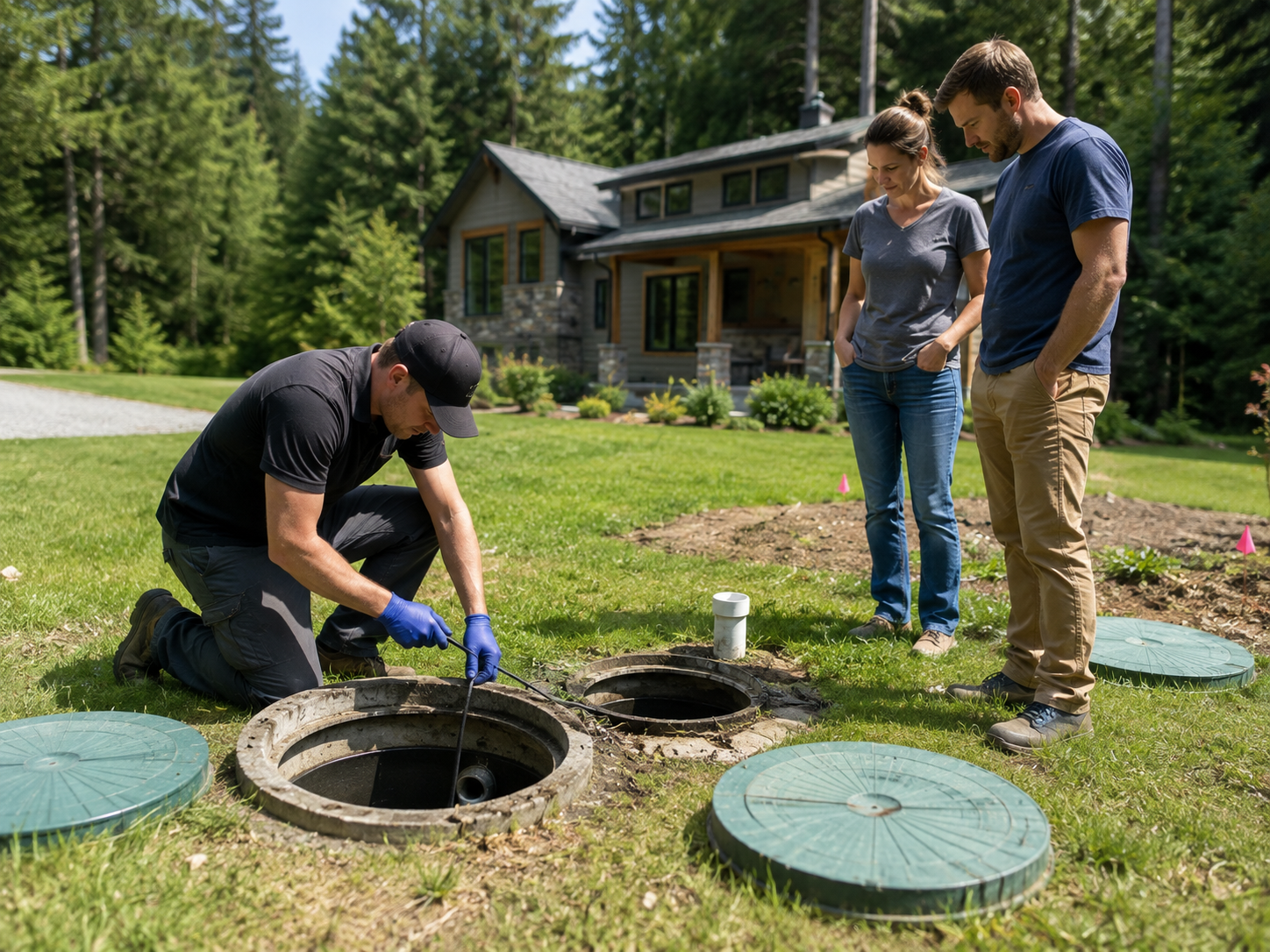
Summer is one of the busiest seasons for real estate across Vancouver Island. Families often prefer to move before the new school year begins, longer daylight hours make home viewings easier, and favorable weather creates ideal conditions for inspections and property improvements.
If the home you’re buying or selling relies on a private septic system, one important step should never be overlooked—a professional septic inspection.
While buyers often arrange general home inspections, the septic system may require a separate evaluation. Because much of the system is buried underground, problems aren’t always visible during a routine walkthrough. A professional septic inspection provides valuable information about the system’s condition and can help buyers and sellers make informed decisions before closing.
In this guide, we’ll explain why septic inspections matter, what they typically involve, common warning signs, and how they can help support a smoother real estate transaction.
Why Septic Inspections Matter During a Home Sale
Unlike a roof or exterior siding, a septic system operates largely out of sight. That makes it easy for hidden issues to go unnoticed until they become expensive repairs.
A septic inspection provides an opportunity to evaluate the system’s overall condition before ownership changes hands.
For buyers, it helps reduce uncertainty about one of the home’s most important infrastructure systems.
For sellers, it demonstrates transparency and may help address concerns before they delay negotiations.
Understanding How a Residential Septic System Works
A basic understanding of how a septic system functions helps explain why inspections are important.
Most residential systems include:
| Component | Purpose |
| Septic Tank | Separates solids, oils, and wastewater |
| Inlet and Outlet Baffles | Direct wastewater flow through the tank |
| Distribution Components | Move treated wastewater toward the drain field |
| Drain Field | Disperses wastewater into the surrounding soil |
| Soil | Naturally filters and treats wastewater |
Each component plays an important role. If one part isn’t functioning properly, the performance of the entire system may be affected.
Why Summer Is an Ideal Time for a Septic Inspection
Summer offers several practical advantages for septic inspections.
These include:
- Better weather for outdoor access
- Easier visibility of drain field conditions
- Improved access to inspection lids
- Favorable conditions for evaluating drainage
- Convenient scheduling during peak real estate season
If you’re buying or selling during the summer months, arranging an inspection early can help avoid unnecessary delays.
Benefits for Home Buyers
Purchasing a home is one of the largest financial decisions most people make.
A septic inspection offers valuable peace of mind.
Better Understanding of System Condition
An inspection provides information about the current condition of the septic system.
While no inspection can predict every future issue, it helps identify visible concerns and maintenance needs at the time of the evaluation.
Helps Avoid Unexpected Repairs
Because septic systems are underground, repairs can sometimes be more involved than homeowners expect.
Identifying issues before closing allows buyers to make informed decisions about future maintenance or potential repairs.
Supports Long-Term Planning
Knowing the condition of the system helps new homeowners understand maintenance priorities after moving in.
This may include scheduling future inspections or routine septic tank pumping.
Benefits for Home Sellers
A septic inspection can also benefit homeowners preparing to list their property.
Builds Buyer Confidence
Providing information about the septic system demonstrates openness and preparedness.
Buyers often appreciate having additional information about major property systems.
Helps Prevent Last-Minute Surprises
Unexpected issues discovered late in the transaction can create unnecessary stress.
Scheduling an inspection before listing provides an opportunity to address concerns earlier in the process.
Supports a Smoother Transaction
When buyers have confidence in the condition of the property’s major systems, negotiations may proceed more efficiently.
What Happens During a Septic Inspection?
Inspection procedures vary depending on the property and system design, but a professional septic inspection commonly includes evaluating:
- Septic tank condition
- Accessible components
- Baffles
- Signs of excessive sludge or scum accumulation
- Drain field condition
- Visible piping
- General system performance
- Evidence of leaks or damage
The goal is to provide an informed assessment of the system’s observable condition at the time of inspection.
Common Warning Signs That Shouldn’t Be Ignored
Even before an inspection, certain symptoms may suggest the septic system deserves professional attention.
Slow Drains
If multiple fixtures throughout the home drain slowly, it may indicate a developing septic issue rather than a simple plumbing blockage.
Sewage Odours
Persistent odours near the septic tank, drain field, or inside the home should always be investigated.
Standing Water
Wet areas around the drain field—particularly during dry weather—may indicate wastewater isn’t dispersing properly.
Unusually Green Grass
Lush patches directly above septic components can sometimes signal wastewater reaching the surface sooner than intended.
Sewage Backups
Wastewater backing into sinks, showers, or toilets requires immediate professional attention.
Common Mistakes Buyers and Sellers Make
Many septic-related issues stem from simple oversights.
Assuming the Home Inspection Covers Everything
A general home inspection may not include a comprehensive evaluation of the septic system.
Buyers should understand what is—and isn’t—included in the inspection they arrange.
Waiting Until the Last Minute
Scheduling an inspection early provides more flexibility if additional maintenance or repairs are recommended.
Ignoring Maintenance Records
If available, maintenance records can provide useful information about previous servicing and routine care.
Overlooking the Drain Field
The drain field is just as important as the septic tank itself.
Its condition should not be overlooked during the inspection process.
Frequently Overlooked Details
Several important factors are often missed during real estate transactions.
These include:
- Drain field location
- Septic tank accessibility
- Evidence of previous repairs
- Nearby trees with invasive roots
- Surface drainage patterns
- Vehicle traffic over septic components
- Landscaping built over the drain field
- Future maintenance access
Understanding these details helps buyers and sellers make better-informed decisions.
Preventive Maintenance After Buying a Home
A septic inspection is only the beginning of responsible ownership.
Once you’ve moved into your new home:
Schedule Routine Maintenance
Regular inspections and maintenance help keep the system operating efficiently.
Learn Your System Layout
Knowing the location of your:
- Septic tank
- Inspection lids
- Drain field
- Distribution components
makes future maintenance much easier.
Protect the Drain Field
Avoid:
- Parking vehicles
- Building sheds
- Installing patios
- Planting deep-rooted trees
Protecting the drain field helps preserve long-term performance.
Practice Water Conservation
Avoid overwhelming the septic system by:
- Spacing out laundry loads
- Repairing leaking fixtures
- Using water efficiently throughout the home
Cost Considerations
Every septic system is unique, and costs vary depending on the property’s size, system type, accessibility, and overall condition.
Generally speaking:
| Service | Typical Complexity |
| Routine inspection | Low |
| Septic tank pumping | Low to Moderate |
| Minor maintenance | Moderate |
| Component repairs | Moderate |
| Major system replacement | High |
Preventive inspections often provide valuable information that helps homeowners plan for future maintenance rather than responding to unexpected problems.
Professional Recommendations
Whether you’re buying or selling, experienced septic professionals generally recommend:
✔ Schedule the septic inspection early in the transaction.
✔ Ask questions about maintenance history if records are available.
✔ Learn where the septic tank and drain field are located.
✔ Continue routine maintenance after the sale is complete.
✔ Address small concerns before they become larger repairs.
Taking a proactive approach helps protect both your property and your investment.
Why Choose ViReel Septic Services
When it comes to buying or selling a home, having reliable information about your septic system is invaluable.
ViReel Septic Services proudly assists homeowners, buyers, sellers, and real estate professionals throughout Vancouver Island with septic inspections, maintenance, repairs, and expert guidance. With local knowledge, dependable service, honest recommendations, and a commitment to quality workmanship and safety, the team helps clients better understand the condition of their septic systems and make informed decisions with confidence.
Whether you’re preparing your home for the market or evaluating a prospective purchase, ViReel Septic Services is ready to provide professional septic inspection services tailored to your property’s needs.
Frequently Asked Questions
Why should I get a septic inspection before buying a home?
A septic inspection helps evaluate the condition of the system at the time of purchase, providing valuable information about maintenance needs and any visible concerns.
Is a septic inspection different from a home inspection?
Often, yes. Many general home inspections do not include a detailed evaluation of private septic systems, so a separate inspection may be recommended.
How long does a septic inspection usually take?
Inspection times vary depending on the property’s size, accessibility, and system design.
Can a septic inspection predict future failures?
No inspection can predict future performance with certainty. However, it can identify observable conditions and maintenance issues present at the time of the evaluation.
Should sellers arrange an inspection before listing?
Many sellers choose to do so because it provides valuable information about the property’s septic system and may help avoid surprises later in the transaction.
How often should septic systems be inspected after purchasing a home?
Inspection frequency depends on household size, system usage, and the type of septic system. A qualified septic professional can recommend an appropriate maintenance schedule.
Conclusion
Buying or selling a home on Vancouver Island involves many important decisions, and a professional septic inspection is one of the smartest investments you can make when a property relies on a private wastewater system.
For buyers, it provides greater confidence and a clearer understanding of the property’s condition. For sellers, it demonstrates transparency and may help facilitate a smoother transaction by addressing potential concerns early.
If you’re planning to buy or sell a home this summer, contact ViReel Septic Services to schedule a professional septic inspection. Their knowledgeable team is here to help you understand your septic system, answer your questions, and support a successful real estate transaction with dependable service and practical expertise.