

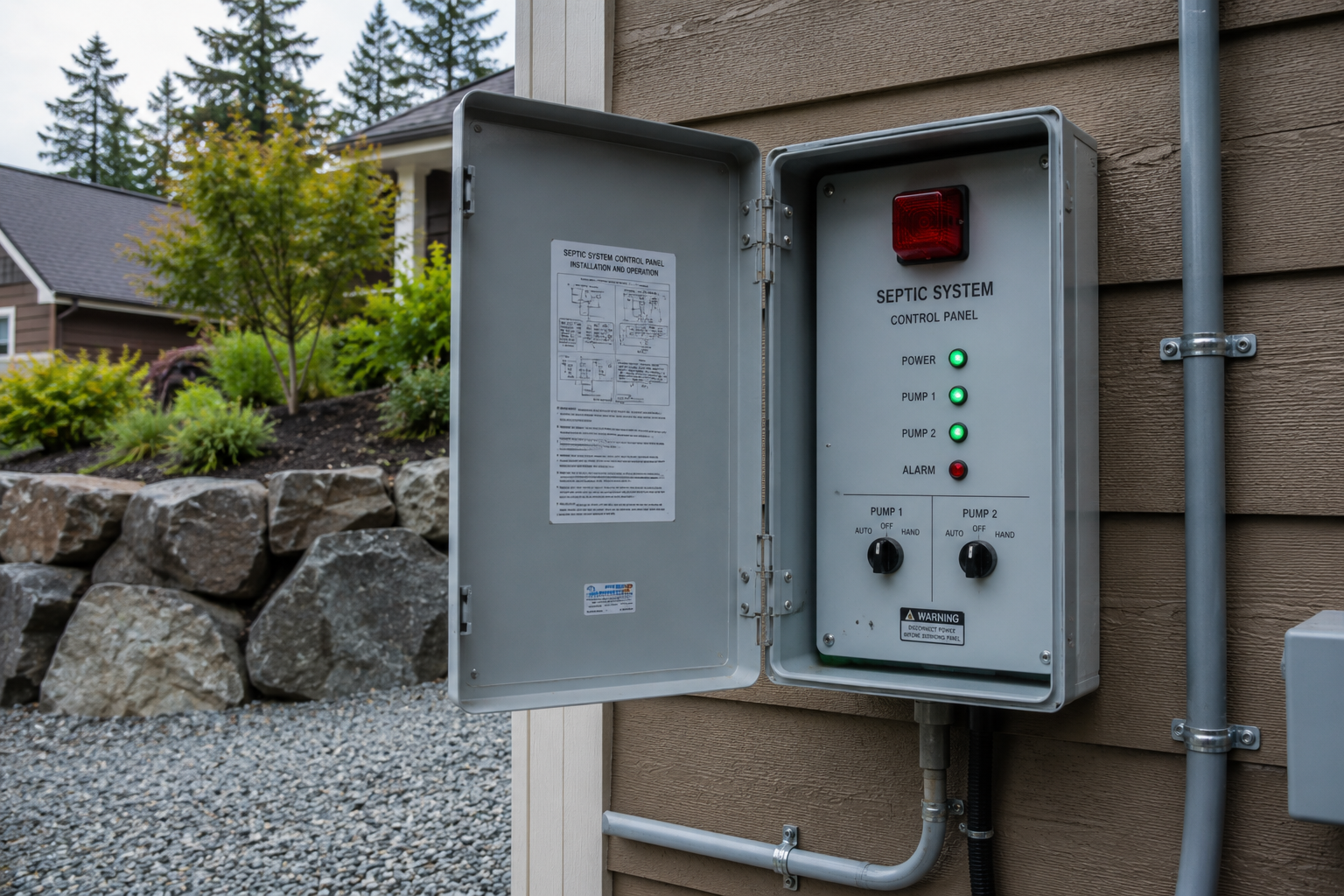
Not every septic system has an alarm, but for the ones that do, typically systems with a pump station moving effluent uphill or to a distant field, that alarm is the first and often only warning you get before a bigger problem develops. Understanding what different alarm patterns mean, and what to do when one goes off, keeps a manageable issue from turning into an emergency.
Why some systems have pumps and alarms at all
Gravity-fed septic systems, where the drain field sits downhill from the tank, do not need a pump, water simply flows downhill through the system. Many properties, particularly on sloped or challenging Vancouver Island terrain, need a pump station to move effluent uphill or across distance to reach a suitable drain field location. Wherever a pump is involved, an alarm system is standard practice, since a pump failure in one of these systems can quickly lead to backup or overflow that a gravity system would not experience the same way.
What the alarm is actually monitoring
Most septic alarm systems use a float switch in the pump chamber that rises with the effluent level. Under normal operation, the pump activates at a set level, moves effluent out, and the float drops back down, resetting the cycle. The alarm triggers when the effluent level rises above where it should be during normal operation, which almost always means the pump is not keeping up, either because it has failed, lost power, or is struggling against a blockage or mechanical issue downstream.
Common alarm patterns and what they usually indicate
Alarm sounds once, then stops on its own
This can indicate a brief overload, unusually high water use in a short period, laundry, guests, a leaking fixture, that the pump caught up with once the surge passed. Worth monitoring, but not necessarily an emergency if it does not recur.
Alarm sounds and continues, pump audibly running
This suggests the pump is running but not keeping pace with incoming effluent, which can point to a partial blockage, a pump nearing the end of its service life and losing capacity, or genuinely excessive water use overwhelming the system’s normal capacity.
Alarm sounds, pump is silent
This is the pattern that most often indicates outright pump failure or a power interruption to the pump circuit, and calls for prompt attention, since effluent will continue rising with no pump running to move it.
Alarm sounds intermittently over an extended period
Recurring alarms over days or weeks, even if they seem to resolve each time, suggest an underlying issue that is not actually fixing itself, a pump losing capacity gradually, or a system operating close to its limit even under normal conditions.
What to do when an alarm goes off
- Reduce water use immediately, hold off on laundry, long showers, or dishwasher use until the situation is assessed
- Note whether the pump is audibly running or silent, since this affects the likely cause
- Check whether the alarm has a manual silence or reset button, and if resetting causes it to trigger again quickly
- Avoid ignoring a persistent or recurring alarm, since continued use while a pump is struggling increases the risk of backup into the house
- Call for professional service if the alarm continues, the pump is silent, or this is a repeat occurrence
Pump lifespan and why replacement eventually becomes necessary
Effluent pumps have a finite service life, typically somewhere in the range of seven to ten years depending on usage, pump quality, and how hard the system works overall, though this varies meaningfully by situation. As pumps age, they can lose capacity gradually before failing outright, which is part of why intermittent alarms sometimes appear months before a pump fails completely rather than the failure happening with no warning at all. Replacing a pump proactively once it starts showing signs of reduced capacity, rather than waiting for complete failure, avoids the higher-stress scenario of a mid-crisis emergency replacement.
Common causes behind a struggling pump beyond simple age
Not every pump issue is purely age related. A pump can struggle or trip an alarm due to debris or solids that should not be in the pump chamber in the first place, often from items flushed that should not be, wipes, feminine hygiene products, or excessive food waste from a garbage disposal, all of which can jam or damage pump impellers over time. Electrical issues, a failing float switch, a tripped breaker, or a loose wiring connection, can also cause alarm activation that has nothing to do with the pump’s mechanical condition, which is one reason a proper diagnosis matters rather than assuming pump replacement is automatically the answer every time an alarm sounds.
Seasonal factors that affect pump systems
Heavy rain events can increase groundwater infiltration into some systems, particularly older tanks with less watertight seals, adding volume the pump has to handle beyond normal household wastewater. Winter conditions can also affect pump performance if any part of the system is exposed to freezing temperatures without adequate protection, though this is less of a universal concern on the milder Island climate compared to colder regions. Being aware that alarm frequency can shift seasonally, rather than assuming any change indicates a sudden new problem, helps put an isolated incident into better context.
Power interruptions and backup considerations
Since pump systems rely on electricity, a power outage disables the pump just as effectively as a mechanical failure would, and effluent continues arriving from the house regardless of whether the pump can move it. Properties that experience frequent power interruptions, or that are in more remote areas where outages last longer before restoration, sometimes benefit from a battery backup or generator connection specifically for the septic pump circuit, reducing the risk of backup during an extended outage.
Frequently asked questions
Is it ever okay to ignore a septic alarm?
A single, brief alarm that resolves on its own after reduced water use is less concerning, but any recurring or persistent alarm should be checked by a professional rather than ignored, since it usually indicates a developing problem rather than a one-time fluke.
How long can I go without addressing an alarm before it becomes an emergency?
This varies by system and how much reserve capacity exists in the pump chamber, but continuing normal water use with a persistent alarm and a non-functioning pump can lead to backup into the house within a day or two in some systems, so prompt attention is the safer approach.
Do all septic systems have alarms?
No, gravity-fed systems without a pump typically do not need one, since there is no pump to monitor. Any system with a pump station, common on sloped or distant drain field properties, should have a functioning alarm.
How do I know if my alarm system itself is working properly?
Many alarm panels have a test function, and a professional inspection can confirm the float switch and alarm circuit are functioning correctly. This is worth checking periodically, since a failed alarm system defeats the purpose of having one in the first place.
Can flushing the wrong items really cause an alarm to trigger?
Yes, wipes, hygiene products, and similar items can jam or damage pump components even if they make it through the tank without an obvious backup, which can trigger an alarm well before any other visible symptom appears.
Does heavy rain affect my septic pump system?
It can, particularly on older systems with less watertight tank seals, where groundwater infiltration adds volume the pump needs to handle. This is worth mentioning to whoever inspects your system if alarms seem to correlate with wet weather.
If your septic alarm has gone off, or you want to have your pump and alarm system checked before it becomes an issue, Vireel can come take a look and get you a clear answer.