

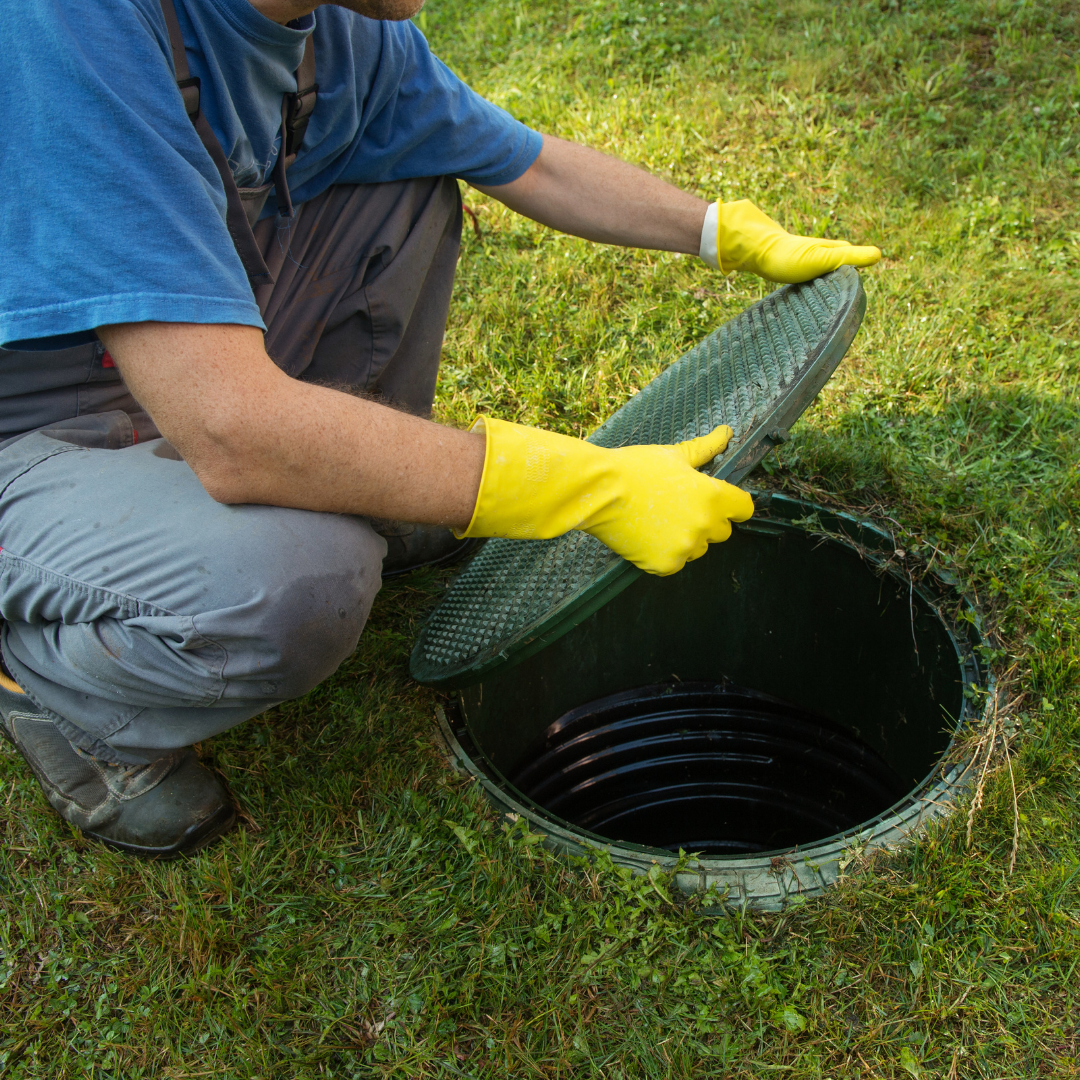
May is when Vancouver Island backyards come back to life. The ground dries out, the weather holds, and everyone who spent the winter mentally redesigning their yard finally starts calling contractors or renting equipment.
It’s also when we get calls from homeowners who just put a fence post through their septic line.
Hitting a septic system component during a backyard project is more common than most people expect. On Vancouver Island, where a significant portion of rural and semi-rural properties run on private septic systems, it’s a genuine seasonal risk. And unlike nicking an irrigation line or a buried electrical conduit, damaging a septic tank, distribution box, or drain field doesn’t just cause inconvenience. It causes a health hazard, a repair bill that can run into the thousands, and in some cases a complete system failure that requires provincial inspection before the property can be used normally again.
The fix is simple: know where your system is before anything gets dug. That sounds obvious until you realize many homeowners genuinely have no idea where their system is.
Why So Many Homeowners Don’t Know Where Their Septic Tank Is
It’s not a lack of interest. Most homeowners simply inherited their property’s septic system without any documentation, and the previous owners didn’t leave records either.
On Vancouver Island, many properties with older systems were installed before provincial record-keeping requirements were standardized. The tank might be where common sense suggests it should be, or it might not be anywhere near where you’d guess. Systems have been installed under decks, along property lines, at significant distances from the home, and in locations that made sense to the installer 40 years ago but aren’t obvious today.
Even homeowners who have lived on their property for years sometimes don’t have a clear mental map of where the full system sits, particularly the drain field, which can spread across a larger area than most people realize.
What Projects Put Septic Systems at Risk
Almost any ground-disturbing work in a residential backyard carries some risk if the septic layout isn’t known. The most common culprits:
Fence Installation
Post holes are one of the most frequent causes of accidental septic damage. They go down fast, often with a power auger, and a line or tank lid can be hit before anyone realizes what’s underneath. The distribution box, which directs effluent from the tank to the drain field, is typically buried at a shallow depth and is particularly vulnerable.
Deck and Patio Construction
Building footings for a deck, patio stones, or a concrete pad over a drain field compresses the soil and restricts the drainage that the system depends on. Drain fields need oxygen exchange through the soil surface to treat effluent properly. Heavy surface loads over them, even without any digging, can accelerate system failure.
Landscaping and Garden Beds
Tilling, deep-rooted plantings, and raised bed installations all involve soil disturbance that can damage shallow septic components. Tree and large shrub plantings near a drain field are a longer-term risk, as roots actively seek the moisture and nutrients in that area and can infiltrate and block distribution pipes over time.
Grading and Drainage Work
Changing the grade around a drain field alters how water moves through the soil. Too much fill over a drain field can suffocate it. Redirecting surface drainage toward it can oversaturate the soil and cause backup into the home. Grade changes need to account for the septic layout or they can undo a system that’s been working fine for years.
Bobcat and Excavation Work
Any project involving mechanized digging carries the highest risk of direct physical damage. Even a careful operator following a marked layout can cause damage if the map is wrong or incomplete. This is where professional septic locating before the project starts pays for itself immediately.
How to Find Your Septic Tank Location
There are a few approaches, ranging from free and time-consuming to fast and reliable.
Check Your Property Records
The BC Land Title and Survey Authority and your regional health authority may have septic permits and as-built drawings on file for your property. The Island Health authority maintains records for systems installed or upgraded after permit requirements came into effect. This is always worth checking first. If records exist and are accurate, they give you a starting point for physically locating the system.
Look for Physical Clues in the Yard
A few things can point you toward the general location even without records:
- The sewer clean-out pipe on the exterior of the house points in the direction of the tank
- A slight depression or mound in the yard, particularly downhill from the home, can mark the tank or drain field
- Unusually green or lush grass over one section of the yard in dry weather can indicate drain field activity below
- Older concrete or plastic risers flush with the ground surface mark tank access points
These clues help narrow things down but don’t give you the precise location and depth you need before breaking ground.
Have It Professionally Located
A professional septic locating service uses a combination of records, probing, and ground-penetrating methods to mark the tank, distribution box, and drain field with accuracy. This gives you a precise map you can hand to any contractor or use to plan your project layout before any equipment arrives on site.
For any project involving mechanized excavation, grading, or deep post installation within 30 feet of the home, professional locating is the only approach that gives you real confidence the layout is accurate.
What Happens If You Hit a Septic System Component
It depends on what gets hit and how badly.
A cracked distribution box or damaged outlet baffle can be repaired if caught quickly. A crushed or punctured tank typically requires full replacement, which on Vancouver Island runs anywhere from $8,000 to $20,000 or more depending on site conditions, access, and the type of system required. Drain field damage can be even more expensive because compromised field piping or over-compacted soil may require a complete field replacement and a new permit through Island Health.
There’s also the immediate health risk. A ruptured septic component releases raw effluent into the soil and potentially onto the surface. That’s a biohazard situation that requires containment and professional remediation before any other work can continue.
Are septic tank problems covered by homeowners insurance? Sometimes, for sudden accidental damage. But many policies exclude gradual damage and anything attributed to owner negligence, which includes proceeding with excavation work without locating the system first. It’s worth reading your policy carefully before assuming coverage.
How Far Should Any Digging Stay From a Septic System?
BC regulations set minimum setback distances for various structures from septic components, but those numbers are starting points rather than complete guidance.
- Septic tank: Generally a minimum of 1.5 to 3 metres from structures, depending on the component
- Drain field: Usually a minimum of 3 metres from structures, further from water features or property lines
- Trees and large shrubs: Should be kept at least 3 to 6 metres from drain field piping to prevent root intrusion
These minimums assume the system is healthy and functioning. Older systems, particularly those approaching end of life, may need wider clearances. A professional assessment gives you the full picture.
Planning Your Project Around the Septic System
Knowing where your system sits doesn’t mean cancelling your backyard plans. Most projects can be designed around a septic layout without major compromise, as long as you have that layout before you finalize the design.
Fences can be routed around tank access points and drain field boundaries. Decks can be designed with removable panels over service access areas. Garden beds can be placed in areas away from the field. Grade changes can be scoped to avoid the system footprint entirely.
None of that is complicated once you have accurate information. The problem is always going in blind.
Common Questions About Septic Tank Location
Can a septic tank be under a house or deck?
Yes. It’s not common with modern installations, but older systems on Vancouver Island are sometimes located partially under structures, particularly older homes where the original tank was installed before additions were built. This is one of the reasons professional locating rather than visual guesswork is important on older properties.
How deep is a septic tank usually buried?
Typically between 30 centimetres and 1.2 metres below the surface, depending on the soil, the slope of the property, and when it was installed. The distribution box and drain field piping are often shallower. That’s shallow enough that a post-hole auger, a tractor implement, or even aggressive hand digging can reach them easily.
When does a septic tank need to be pumped?
Most residential systems in BC should be pumped every 3 to 5 years, though the right interval depends on household size, usage patterns, and tank capacity. If you’re planning a backyard project and haven’t had the system pumped recently, combining a pump-out with a locating service is efficient and ensures the tank is accessible and documented before work starts.
What are the signs of a failing septic system?
- Slow drains throughout the home, not just one fixture
- Gurgling sounds in drains or toilets
- Sewage odours inside the home or in the yard
- Unusually wet or spongy ground over the drain field area
- Sewage backup into lower-level fixtures
Any of these signs warrant a professional assessment before starting any backyard project, let alone one that involves digging near the system.
Can a septic tank freeze in a BC winter?
In most parts of Vancouver Island, full tank freezing is rare given the mild coastal climate. Shallow pipes in exposed or poorly insulated areas can freeze during an unusually cold stretch, but this is uncommon. The more relevant concern for Island homeowners is high water table and saturated soil during wet winters affecting drain field performance.
Know Before You Dig
A backyard project that hits a septic system doesn’t just stop. It creates a cascade of problems that can take weeks to resolve, involves regulatory requirements, and costs far more than the original project budget. It also starts with something completely avoidable.
If you’re planning fencing, grading, excavation, landscaping, or any ground-disturbing work on your Vancouver Island property this spring, VI Reel can locate your septic system accurately before your project starts. Our team works across Central Vancouver Island with Bobcat equipment and excavation services, and we know the terrain and the septic configurations common to this region.
Contact VI Reel before you break ground. It’s the lowest-cost step in any backyard project.
Visit vireel.ca to get in touch.