

Common Spring Septic Problems Central Vancouver Island Homeowners Should Watch For
Spring on Central Vancouver Island brings longer days, greener lawns, and the return of outdoor projects. For homeowners in Nanaimo, Parksville, Qualicum Beach, Ladysmith, Duncan, and surrounding rural communities, it is also one of the most important times of year to pay attention to your septic system.
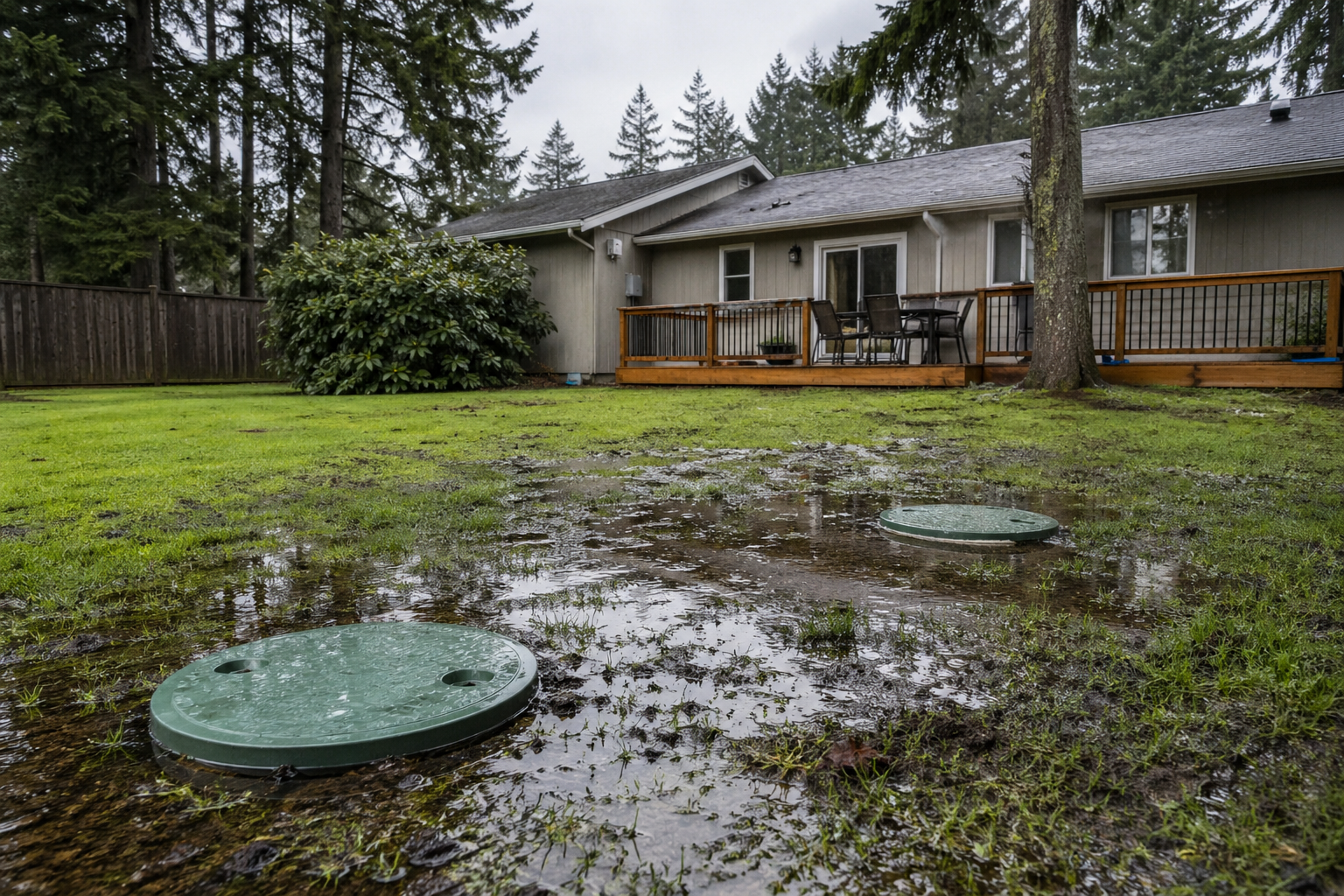
After months of heavy rain, cool temperatures, wet soil, and limited drying time, your septic system may be under more pressure than you realize. Many septic problems stay hidden during normal household use, but spring conditions can reveal issues quickly. A soggy lawn, slow drains, sewage odours, or gurgling toilets may all point to a system that needs attention.
This matters because many homes across Central Vancouver Island rely on onsite wastewater systems instead of municipal sewer. The Regional District of Nanaimo notes that about 18,000 homes in the RDN use onsite systems, commonly known as septic systems, to treat wastewater. These systems are effective when properly maintained.
Spring is the right time to spot problems early, protect your property, and avoid expensive emergency repairs. This guide covers the most common spring septic problems Central Vancouver Island homeowners should watch for, what causes them, and when to call a septic professional.
Why Spring Is Hard on Septic Systems
A septic system depends on a balance between the tank, pipes, drain field, soil, and household water use. Wastewater leaves the home, enters the septic tank, separates into layers, and then moves into the drain field where soil helps filter and absorb the liquid.
During spring, that process can become harder.
Central Vancouver Island properties often deal with:
- Heavy seasonal rainfall
- Saturated soil
- Poor yard drainage
- High groundwater
- Sloped properties
- Shaded lots that dry slowly
- Tree roots near pipes and septic components
- Older septic systems
- Increased spring cleaning and laundry
- Landscaping or excavation projects
When the soil around a septic system becomes saturated, it cannot absorb wastewater as efficiently. VI Reel notes that Vancouver Island’s coastal climate and heavy rainfall can overwhelm septic systems, and saturated soil can lead to drain field backups and possible system failure.
In other words, spring rain can act like a stress test. If your system is healthy and well-maintained, it may handle the season without issue. If it is overdue for service, partially blocked, poorly draining, or damaged, spring is often when the warning signs appear.
1. Slow Drains Throughout the Home
Slow drains are one of the most common signs of a spring septic issue.
You may notice:
- Bathroom sinks draining slowly
- Kitchen sinks holding water
- Showers draining slower than usual
- Toilets flushing weakly
- Laundry drains struggling
- Multiple fixtures slowing down at the same time
One slow drain may simply be a clog in that fixture. But when several drains slow down together, the septic system may be involved.
In spring, slow drains often happen because the drain field is too wet to accept wastewater properly. When the soil is saturated, wastewater cannot move away from the system as easily. This can cause pressure to build and drainage inside the home to slow down.
What to do
Start by reducing water use. Avoid running the dishwasher, doing multiple loads of laundry, or taking long showers until the system catches up. If slow drainage continues or affects several fixtures, schedule a septic inspection.
Do not rely on chemical drain cleaners. They may damage the helpful bacteria inside your septic tank and will not fix drain field saturation.
2. Gurgling Toilets and Drains
Gurgling sounds are another warning sign homeowners often notice in spring.
You might hear gurgling from:
- Toilets
- Shower drains
- Bathtub drains
- Bathroom sinks
- Kitchen drains
- Laundry drains
This sound can happen when air becomes trapped or pushed through the plumbing because wastewater is not flowing smoothly. If the septic system is struggling to release wastewater into the drain field, air and water may move irregularly through the pipes.
Gurgling is especially concerning when it appears after heavy rain or alongside slow drains.
What to do
Do not ignore repeated gurgling. If it happens once, monitor it. If it continues, worsens, or comes with sewage odours, call a septic professional before a backup occurs.
3. Sewage Smells Inside or Outside
A healthy septic system should not create strong sewage smells in the home or yard.
In spring, odours may appear when wastewater is not moving through the system properly. Saturated soil, blocked pipes, overloaded tanks, or drain field issues can all cause unpleasant smells.
You may notice odours:
- Near toilets or drains
- Around basement floor drains
- In the laundry area
- Outside near the septic tank
- Around the drain field
- Near wet patches in the yard
A sewage smell is a warning sign that should be taken seriously. It may mean gases are escaping, wastewater is surfacing, or the system is under pressure.
What to do
If the smell is mild after a major rainstorm, reduce water use and monitor the area. If the odour remains, gets stronger, or appears with wet ground or backups, contact a septic service provider.
Island Health explains that failing sewerage systems can create health hazards, including sewage ponding on the ground surface or entering drinking water sources.
4. Standing Water Near the Septic Tank or Drain Field
Spring rain can leave many yards wet, but standing water near a septic area deserves special attention.
Look for:
- Puddles above the drain field
- Wet, spongy soil
- Water pooling around the tank
- Muddy patches that do not dry
- Water appearing after showers or laundry
- Wet areas with sewage smell
The drain field is designed to absorb liquid wastewater. If that area is already full of rainwater, it may not be able to accept more. This can cause liquid to collect near the surface.
Standing water may also indicate compacted soil, poor grading, damaged pipes, or a failing drain field.
What to do
Keep people, pets, vehicles, and heavy equipment away from the wet area. Reduce household water use and call a septic professional if the water does not dry, smells bad, or keeps returning.
5. Extra-Green Grass Over the Drain Field
A bright green patch of grass may look harmless, especially in spring. But if the grass above your drain field is much greener, thicker, or faster-growing than the rest of the lawn, it may be a sign of excess wastewater near the surface.
This can happen when:
- The drain field is overloaded
- Wastewater is rising too close to the surface
- Pipes are leaking
- The system is not dispersing liquid evenly
- The soil is too wet to absorb properly
Not every green patch means failure. Spring grass naturally grows quickly. But when unusually lush grass appears above the septic area and is paired with odours, wet soil, or slow drains, it is worth investigating.
What to do
Mark the area and monitor it. If it stays wetter than the rest of the yard or has a sewage smell, book an inspection.
6. Septic Backups After Heavy Rain
A sewage backup is one of the most serious septic problems a homeowner can experience.
Backups may occur in:
- Toilets
- Bathtubs
- Showers
- Basement drains
- Laundry sinks
- Utility drains
After heavy spring rain, the drain field may be unable to absorb wastewater. When wastewater cannot move forward, it may move backward into the home.
This is more than an inconvenience. It can create health risks, property damage, cleanup costs, and major stress.
What to do immediately
Stop using water as much as possible. Do not flush toilets, run laundry, use the dishwasher, or take showers unless absolutely necessary. Call a septic professional right away.
If sewage is surfacing outside or backing up inside, the system needs urgent attention.
7. Clogged Effluent Filters
Many septic systems have an effluent filter that helps prevent solids from leaving the tank and entering the drain field. This filter protects the system, but it can become clogged if maintenance is neglected.
In spring, a clogged filter may become more noticeable because the system is already under pressure from wet soil and increased water use.
Signs of a clogged effluent filter may include:
- Slow drains
- Gurgling
- Sewage odours
- Wastewater backing up
- High water levels in the tank
- Alarm activation in some systems
What to do
Do not attempt to open or enter a septic tank yourself. Septic tanks contain dangerous gases and should only be handled by trained professionals.
If you suspect a clogged filter, schedule service. A professional can inspect and clean the filter safely.
8. Tree Root Intrusion
Central Vancouver Island is known for mature trees, wooded lots, and beautiful natural landscapes. But tree roots can create problems for septic systems.
Roots are attracted to moisture and nutrients. If there is a small crack or weak point in a pipe, roots may enter and grow inside. Over time, they can block wastewater flow or damage components.
Spring growth can make root-related problems more noticeable.
Warning signs include:
- Slow drains
- Recurring clogs
- Gurgling sounds
- Wet spots in the yard
- Uneven drain field performance
- Backups during heavy use
What to do
Avoid planting large trees or deep-rooted shrubs near septic components. If you already have mature trees near the system and notice recurring issues, ask a septic professional to assess the pipes and drain field.
9. Poor Yard Drainage Around the Septic Area
Not all septic problems start inside the system. Sometimes the issue is how rainwater moves across your property.
Poor grading, clogged ditches, blocked drains, compacted soil, and downspouts can all send extra water toward the septic area.
This is a common spring problem because rainfall reveals where water naturally collects.
Watch for:
- Downspouts draining toward the septic field
- Water running downhill into the drain field
- Low spots holding water
- Driveway runoff flowing toward the tank
- Patio or roof drainage pooling near septic components
- Landscaping that traps water over the field
When stormwater is directed into the drain field, the system has to compete with rainwater. This can overload the soil absorption area.
What to do
Redirect downspouts, improve grading, and keep drainage channels clear. Spring rain guidance commonly recommends redirecting surface water away from drain fields and avoiding heavy water use after storms.
If the yard repeatedly drains toward your septic system, professional grading or drainage improvements may be needed.
10. Soil Compaction Over the Drain Field
Spring soil is often soft and wet. That makes it more vulnerable to compaction.
Driving vehicles, trailers, ATVs, or heavy equipment over the drain field can compress the soil. Compacted soil does not absorb and treat wastewater as well. It can also damage pipes or other components below the surface.
This is especially important in spring because homeowners often begin landscaping, fencing, construction, and outdoor cleanup projects.
Avoid placing these over the drain field:
- Cars
- Trucks
- RVs
- Trailers
- Boats
- Excavators
- Skid steers
- Storage containers
- Sheds
- Patios
- Heavy garden beds
The BC government warns that saturated soil is especially susceptible to compaction, which can reduce the soil absorption field’s ability to treat wastewater and may lead to system failure.
What to do
Know where your septic tank and drain field are located before starting spring projects. Keep heavy equipment away from the area and mark the drain field if contractors are working on your property.
11. Damaged or Missing Septic Lids and Risers
Spring is a good time to check accessible septic components from the surface.
Damaged lids, blocked inspection ports, or missing riser covers can create safety hazards and allow water to enter the system. Extra surface water entering the tank can overload the system and create performance issues.
Look for:
- Cracked lids
- Sunken covers
- Loose riser lids
- Soil erosion around access points
- Blocked inspection ports
- Damage from lawn equipment
- Water pooling around lids
What to do
Do not open the tank yourself. If you see damage, contact a septic professional. Secure covers are important for safety and system protection.
12. Increased Water Use From Spring Cleaning
Spring cleaning can add extra pressure to a septic system.
Many homeowners do more laundry, deep cleaning, pressure washing, guest hosting, and outdoor preparation in spring. While these tasks may seem normal, large amounts of water entering the system in a short period can overwhelm the tank and drain field.
High water use can stir up solids in the tank and push wastewater into the drain field faster than it can be absorbed.
What to do
Spread out water-heavy tasks.
Instead of doing all laundry in one day, divide loads across the week. Run the dishwasher only when full. Fix dripping faucets and running toilets. Take shorter showers during wet weather.
Water conservation is one of the simplest ways to reduce spring septic stress.
13. Flushing the Wrong Items
Septic systems are sensitive to what goes down the drain. Spring cleaning often means more wipes, paper towels, disinfectants, grease, and cleaning products entering the home’s plumbing.
Avoid flushing or draining:
- Wipes, even if labelled flushable
- Paper towels
- Feminine hygiene products
- Dental floss
- Cotton pads
- Grease and cooking oil
- Coffee grounds
- Paint
- Solvents
- Harsh drain cleaners
- Medications
- Cat litter
- Excessive bleach or disinfectants
These items can clog pipes, disrupt bacteria in the tank, or increase solids.
What to do
Use septic-safe toilet paper, dispose of grease in the garbage, and use cleaning products in moderation. The only things that should be flushed are human waste and toilet paper.
14. Problems With Older Septic Systems
Many Central Vancouver Island properties have older homes and older septic systems. Older systems may still work, but they can be more vulnerable during spring conditions.
Older septic systems may have:
- Aging pipes
- Limited capacity
- Poor records
- Unknown tank location
- Older drain field design
- Past repairs that were not documented
- Increased demand from modern appliances
- Added suites or household occupancy changes
If your system was designed for a smaller household but now serves more people, it may struggle during wet seasons.
What to do
Schedule a professional inspection if you do not know the system’s age, layout, or maintenance history. Good records help protect your home and make future repairs easier.
15. Septic Issues During Home Sales
Spring is a busy season for real estate. If you are buying or selling a home on Central Vancouver Island, septic problems can affect the transaction.
Buyers may want to know:
- Where the tank and drain field are located
- When the tank was last pumped
- Whether the system has been inspected
- Whether there are signs of failure
- If the system is suitable for the home’s current use
- Whether repairs are needed
For sellers, a spring septic inspection can reduce uncertainty and help prevent delays. For buyers, it can reveal expensive issues before closing.
What to do
Request maintenance records, inspection reports, and system drawings. If records are missing, hire a professional to assess the system.
Spring Septic Problem Checklist for Homeowners
Use this checklist after heavy rain or before starting spring projects:
| Warning Sign | Possible Cause | Recommended Action |
|---|---|---|
| Slow drains | Saturated drain field or blockage | Reduce water use and monitor |
| Gurgling toilets | Restricted wastewater flow | Call if it continues |
| Sewage odour | Wastewater surfacing or system pressure | Inspect and call a professional |
| Standing water | Drain field overload or failure | Keep area clear and schedule service |
| Extra-green grass | Excess wastewater near surface | Monitor and inspect |
| Sewage backup | Serious blockage or system overload | Stop water use and call immediately |
| Alarm sounding | Pump, filter, or high-water issue | Reduce use and call for service |
| Wet drain field | Poor absorption or heavy rain impact | Avoid traffic and monitor |
| Root issues | Pipe intrusion or damage | Get professional assessment |
| Water flowing toward field | Poor grading or downspouts | Redirect runoff |
How Central Vancouver Island Homeowners Can Prevent Spring Septic Problems
The best way to avoid septic emergencies is to be proactive.
Schedule regular inspections
Professional inspections help identify small issues before they turn into major repairs. The RDN’s SepticSmart program explains that care and maintenance includes regular tank pump-outs, monitoring, and inspections, with upgrades and repairs completed when needed.
Pump the tank when needed
Pumping frequency depends on tank size, household size, usage, and system condition. Do not wait until the system backs up.
Protect the drain field
Keep vehicles, heavy equipment, deep-rooted plants, buildings, and impermeable surfaces away from the field.
Redirect rainwater
Move downspouts, sump discharge, and surface runoff away from septic areas.
Reduce water use during wet periods
Spread out laundry, fix leaks, and avoid draining large volumes of water into the system.
Keep accurate records
Save your septic layout, maintenance plan, pumping records, inspection reports, and repair history.
Use an Authorized Person for repairs
In BC, septic construction, alteration, and repair should involve an Authorized Person. Island Health states that an Authorized Person may be a Professional Engineer or Registered Onsite Wastewater Practitioner who meets regulatory requirements.
When to Call a Septic Professional
Call a professional if you notice:
- Sewage backing up into the home
- Strong sewage odours
- Standing water near the septic field
- Wet patches that do not dry
- Multiple slow drains
- Gurgling toilets
- Septic alarm activation
- Recurring problems after rain
- Unknown septic system location
- Drain field damage
- Tree root concerns
- Plans for excavation, grading, fencing, or landscaping near the system
Do not wait until the problem becomes severe. Spring septic issues often get worse if ignored, especially when wet weather continues.
Why Local Septic Support Matters
Central Vancouver Island properties are not all the same. A septic system on a wooded rural property near Nanaimo may face different challenges than a system on a sloped lot in Ladysmith or a family home near Parksville.
Local experience matters because septic performance can be affected by:
- Soil type
- Rainfall patterns
- Tree coverage
- Slope and grading
- Property size
- System age
- Drainage patterns
- Local regulations
- Home usage
A local septic professional can assess your system in the context of your property, not just the tank itself.
VI Reel provides septic inspections, maintenance, repairs, installations, and related excavation services for homeowners in Nanaimo and Central Vancouver Island. This makes them a practical choice for homeowners who need help identifying spring septic issues before they become larger problems.
Frequently Asked Questions
What is the most common spring septic problem?
One of the most common spring septic problems is a saturated drain field. When the soil is full of rainwater, it cannot absorb septic wastewater as efficiently. This can cause slow drains, odours, standing water, or backups.
Why does my septic system smell after spring rain?
A sewage smell after rain may mean the drain field is saturated, wastewater is not dispersing properly, or gases are escaping from the system. If the smell continues or appears with wet ground, schedule an inspection.
Is standing water over my drain field normal?
A wet lawn after rain can be normal, but standing water over the drain field that lasts longer than nearby areas, smells bad, or appears after household water use may indicate a septic problem.
Can I drive over my drain field in spring?
No. Spring soil is often wet and vulnerable to compaction. Driving over the drain field can damage pipes and reduce the soil’s ability to absorb and treat wastewater.
Should I pump my septic tank after heavy rain?
Not always. If the issue is saturated soil, pumping may not solve the problem. It is best to have a septic professional assess the situation and recommend the correct next step.
Who can repair septic systems in BC?
Septic construction, alteration, and repair should involve an Authorized Person, such as a Professional Engineer or Registered Onsite Wastewater Practitioner who meets BC regulatory requirements.
How can I prevent septic problems in spring?
Reduce water use during wet weather, redirect runoff away from the drain field, avoid driving over septic areas, keep up with inspections, pump the tank when needed, and avoid flushing wipes, grease, or harsh chemicals.
Final Thoughts
Spring is one of the best times for Central Vancouver Island homeowners to check their septic systems. Heavy rain, saturated soil, landscaping projects, tree root growth, and increased water use can all reveal hidden problems.
The most important signs to watch for are slow drains, gurgling toilets, sewage smells, standing water, extra-green grass, septic backups, and alarm activation. These symptoms may start small, but they can quickly become expensive if ignored.
A septic system is a major part of your home’s health, safety, and property value. With regular maintenance, careful water use, proper drainage, and professional inspections, you can reduce the risk of spring septic problems and keep your system working properly through the warmer months.
Need septic help this spring? Contact VI Reel for septic inspection, maintenance, repair, installation, and excavation services in Nanaimo and Central Vancouver Island. A professional checkup can help you catch problems early, protect your property, and prepare your septic system for the season ahead.