

A well-maintained septic system is one of the most overlooked essentials of a property, yet it directly affects home value, long-term costs, and the safety of your land. When managed correctly, a septic system can operate quietly in the background for decades. When ignored, it becomes an extremely expensive problem, including backups, flooded yards, landscaping destruction, and system failure.
Today’s standards are far more advanced than they were 10 or even 5 years ago. Modern septic systems rely on steady water usage, proper bacterial balance, and preventative maintenance. The principles are simple: protect the tank, support the drain field, and avoid anything that disrupts the biological process inside it.
Maintaining a healthy system begins with consistent water habits. Spreading laundry loads throughout the week avoids overwhelming the tank with sudden surges of water. Modern homes also benefit from low-flow toilets, efficient showerheads, and appliances designed to reduce unnecessary water use. Small choices make a measurable impact on how well a septic system performs.
Documentation matters too. Knowing where the tank, access lids, and drain field are located ensures fast service and prevents accidental damage during future home projects. Keeping a record of each pumping, inspection, or repair creates a clear maintenance history, something that protects you now and adds value if you ever sell the property.
Professional servicing remains non-negotiable. Tanks require periodic pumping to prevent solids from rising high enough to enter and damage the drain field. Pumps, filters, siphons, and other moving components should be checked according to the manufacturer’s schedule. Catching small issues early prevents costly system failures later.
The land surrounding your system plays a larger role than many homeowners realize. Trees with aggressive root systems should never be planted near a drain field; roots naturally seek moisture and will invade underground pipes. Surface water from gutters or slopes must also stay away from the area, as excess runoff can flood the field and slow its ability to treat wastewater. Healthy drain fields need oxygen, not saturation.
Inside the home, only specific products support the biological balance of a septic tank. Liquid detergents, biodegradable cleaners, and single-ply toilet paper break down efficiently. Harsh chemicals, antibacterial products, bleach-heavy cleaners, and multi-ply paper disrupt the natural bacteria that keep the system functioning. Even items labeled “septic safe” can cause long-term problems if they fail to biodegrade quickly.
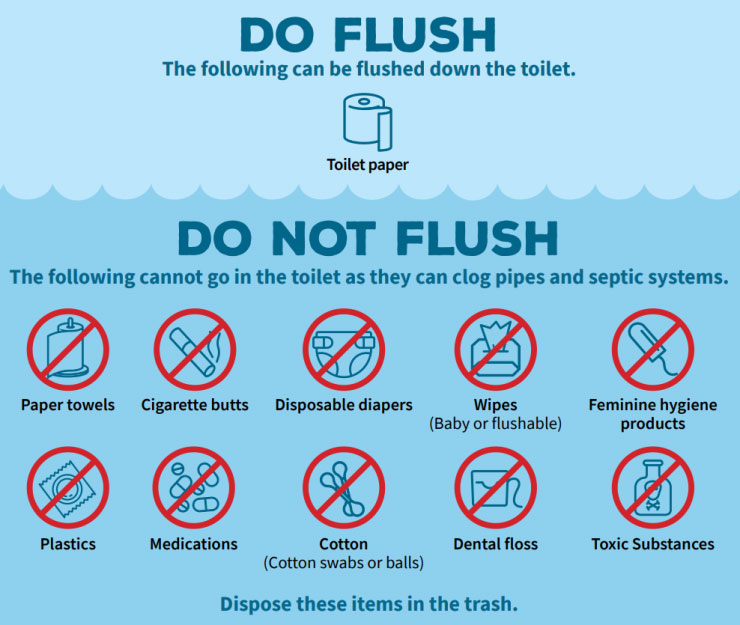
The rule is straightforward: if it isn’t natural waste or toilet paper, do not flush it. Wipes, litter, diapers, grease, medications, oils, plastics, and chemicals do not break down in a septic environment. They accumulate, clog components, and push solids into the drain field where repairs become extremely expensive.
Certain warning signs should never be ignored. Persistent odors outdoors often signal an overfilled tank or a venting issue. Slow drains throughout the home may indicate that the tank needs pumping or that the system requires biological support. Garbage disposals are particularly problematic, food particles do not break down fast enough and can damage the drain field over time.
Modern septic systems often include filters on the outlet line, designed to keep debris from flowing into the drain field. These filters require periodic cleaning to continue protecting the system. When maintained properly, they act as one of the most effective safeguards against long-term damage.
A septic system is an investment in the health, safety, and value of a property. When managed with intention and consistency, it delivers quiet, reliable performance for years. When neglected, the consequences escalate quickly. The best results come from simple habits, informed decisions, and proactive care, a modern approach that protects both the home and the land it sits on.